Platelet-rich plasma (PRP) injection for hair loss Doctors in Jordan
حقن البلازما للشعر
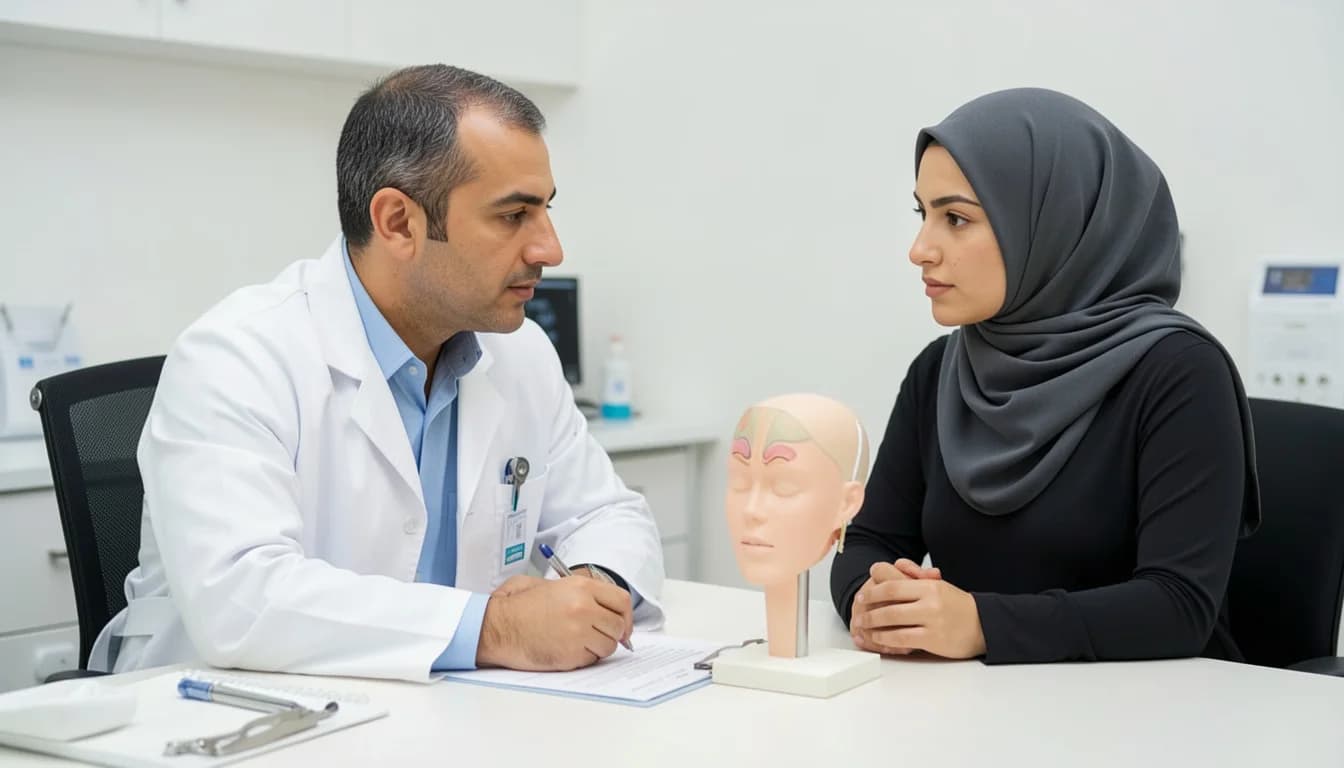
Platelet-rich plasma injection for hair is a clinic procedure in which a quantity of the patient's own blood is drawn, spun in a centrifuge to separate a platelet-concentrated plasma layer, and then injected superficially into the dermis of the scalp in areas where hair has begun to thin. The rationale is that growth factors contained in platelets support weakened follicles and improve the scalp environment, so that the hair growing from them becomes stronger and thicker over time.
The procedure is done in the clinic without general anaesthesia: blood draw, separation, then a series of closely spaced superficial injections covering the target area, usually with topical anaesthetic or cooling to reduce discomfort. The usual protocol is a series of closely spaced initial sessions followed by maintenance sessions at longer intervals, because the effect is not permanent by nature.
The limits must be clear before any money is spent. PRP does not create new follicles. It acts on follicles that are still alive but have become miniaturised. That is why it offers nothing in an area of complete baldness where the skin has become smooth and follicle-free, and why it is not a substitute for hair transplantation in bare areas. Nor is it a cure for androgenetic alopecia: if the cause is genetic and the hormonal driver continues, shedding resumes its course once the underlying medical treatment stops, so PRP here is an adjunct rather than a standalone therapy. Results vary between individuals, and no one should promise a specific outcome.
Because the procedure relies on the patient's own blood, the assessment beforehand is not a formality. The cause of the hair loss must be diagnosed first: injecting the scalp of a patient who actually has iron deficiency, thyroid dysfunction, active alopecia areata or a scarring alopecia wastes time and money and may delay more important treatment. The procedure is avoided or postponed in clotting disorders and low platelets, in patients on blood thinners, with active scalp infection, with active blood disease or malignancy, and in pregnancy and breastfeeding. Suitability is determined by clinical scalp examination and blood tests, not by reading a web page.
2 specialists
Procedure steps
1
Diagnosing the cause before any injection
The pattern of loss and hair density are assessed by clinical examination and trichoscopy, a pull test is performed, and targeted tests such as ferritin, full blood count, thyroid function, vitamin D and hormones where indicated are requested. Scarring alopecia and active alopecia areata are excluded, since their management is entirely different.
2
Blood draw and centrifugation
A quantity of blood is drawn from the patient's arm into dedicated tubes and spun in a centrifuge at a set speed and time to separate the platelet-rich layer from red cells. The sample is prepared using sterile technique, is used only for the same patient, and is injected immediately in the same session.
3
Scalp preparation and comfort measures
The scalp is cleaned and disinfected, and topical anaesthetic, cooling or a vibration device is used to reduce the sting of the needle. Target zones are mapped according to the hairline, the parting and the crown, and the number and distribution of injection points are set before starting.
4
Superficial injection in a regular grid
Very small volumes are injected with a fine needle into the scalp dermis in a closely spaced grid covering the target area, at superficial depth rather than into muscle or bone. Patients may feel brief pressure or warmth; mild redness and tenderness are usual and normally settle within hours to a day.
5
Session plan and combination with medical therapy
A written plan sets out closely spaced initial sessions followed by maintenance, with standardised photography at each visit so change is measured objectively rather than by impression. PRP is combined with treatment of the underlying cause and with topical or oral therapy where indicated, and it is stated plainly that stopping the plan allows shedding to resume.
Before the procedure
Tell your doctor about all your medicines, particularly blood thinners, antiplatelet drugs and anti-inflammatory tablets, and do not stop anything on your own; ask what the appropriate arrangement is. Also report any clotting disorder, low platelets, anaemia or blood disease, any malignancy or immunosuppressive treatment, pregnancy or breastfeeding, and any recent systemic corticosteroid. Drink enough water the day before and eat before your appointment to reduce light-headedness during the blood draw, and avoid alcohol the night before. Wash your hair and arrive with a clean scalp, free of oils, styling products and thickening powders, and without scalp injections or dyes in the preceding days. Tell the team if you have any scalp infection, wound or inflammation, or an allergy to local anaesthetic.
After the procedure
Expect scalp redness, tenderness and perhaps a mild headache on the first day; this is usual. Do not wash your hair or rub the scalp for the rest of the day as your doctor instructs, and avoid chemical products, dyeing and straightening for at least a week. Avoid vigorous exercise, sauna, steam rooms, swimming pools and heavy sweating for two days, keep the scalp out of strong direct sun, and avoid non-steroidal anti-inflammatory drugs if your doctor advises it. Sleep on a clean pillowcase and do not wear a tight cap over an irritated scalp. Most importantly, judge the result after several months using standardised photographs rather than after a single session, and continue treating the underlying cause. **Seek care urgently for fever or chills, increasing pain after the first day, spreading swelling, redness or local heat, pus discharge, pustular folliculitis, a severe persistent unusual headache, facial numbness or weakness, or ulceration or skin colour change at an injection site.**
Expected duration
A session usually takes 30 to 45 minutes with no downtime; the usual protocol is 3 to 4 sessions about 4 weeks apart, then maintenance every 4 to 6 months.
Dr Huda Al Qudah is a consultant dermatologist and venereologist, a Jordan University of Science and Technology graduate and holder of the Jordanian Board. Her …
Dr Reem Al Qudah is a dermatologist and venereologist with the Jordanian Board in dermatology. Her practice combines care for skin, hair and nail disorders with…
Finding Platelet-rich plasma (PRP) injection for hair loss services in Jordan
Which doctors are listed for Platelet-rich plasma (PRP) injection for hair loss in Jordan?
There are currently 2 doctor profiles linked to Platelet-rich plasma (PRP) injection for hair loss on ClinicsJo. Review the listed services and contact the practice to confirm availability with the doctor and branch you choose.
How can I find an appointment for Platelet-rich plasma (PRP) injection for hair loss?
Start with an available doctor's profile and use the contact or booking options shown there. Confirm the service, practice location and appointment time with the clinic. If this list is empty, broaden your search using the directory links on this page.
What does Platelet-rich plasma (PRP) injection for hair loss cost in Jordan?
Ask the practice for the current price and what it includes. A consultation fee shown on a profile is not necessarily the price of a procedure, tests or follow-up. Confirm any additional charges and insurance arrangements before your visit.