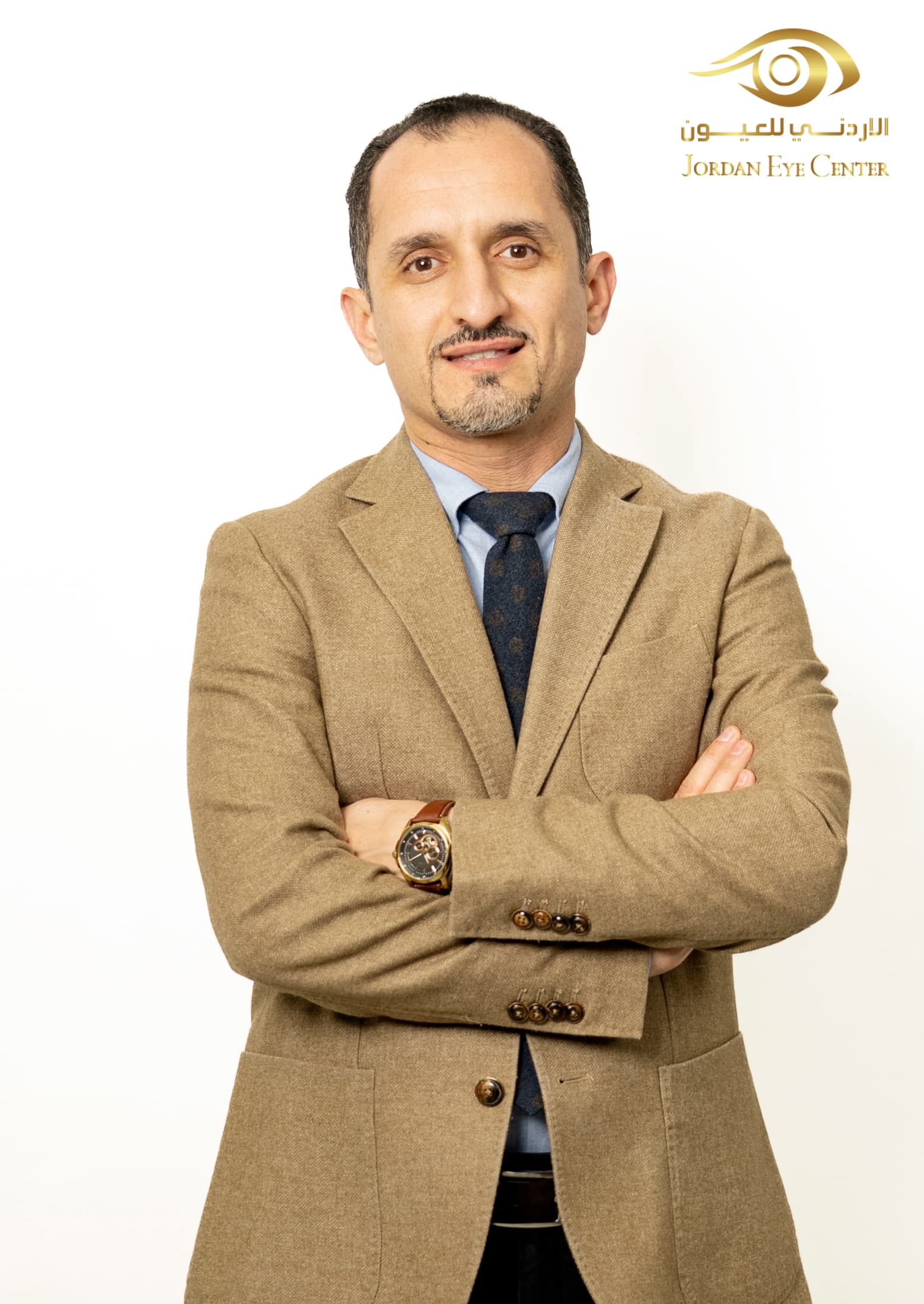
Jordan Eye Center
Sign in to the platform to view the phone number
Hours 08:00–19:00 · 6 days a weekInsurance not specified54 views
Trusted medical platform in Jordan

If you are looking for the best LASIK & vision correction specialists in Mecca Street, this page lists the five eye doctors on ClinicsJo who offer laser vision correction at Jordan Eye Center on Mecca Street, Amman. They are ordered by how complete their published profiles are, not by skill or outcomes. Compare their qualifications, services and confirmed hours, then use our checklist before you book.
| # | Doctor | Area | Suits | Profile score |
|---|---|---|---|---|
| 1 | Muataz Mohammad Harara | Mecca Street | Vision correction questions alongside corneal or retinal concerns | 40/100 |
| 2 | Mais Khaled Al Jbour | Mecca Street | Vision correction plus paediatric, strabismus or eyelid care in one centre | 40/100 |
| 3 | Saif Al Rawashdeh | Mecca Street | LASIK enquiries, cataract surgery, and children's or strabismus eye care | 40/100 |
| 4 | Khalaf Houshan | Mecca Street | Short-sighted adults exploring LASIK; cataract surgery; lazy eye assessment | 38/100 |
| 5 | Yazan Salameh | Mecca Street | Comparing LASIK types, implantable lenses or multifocal cataract lenses | 38/100 |
Dr. Muataz Mohammad Harara is a consultant ophthalmologist and vitreoretinal surgeon at Jordan Eye Center on Mecca Street. He holds the Arab Board and the Jordanian Board in Ophthalmology, plus an International Council of Ophthalmology qualification. His published services include laser vision correction and implantable vision-correction lenses. They also cover corneal cross-linking, corneal transplantation (keratoplasty), cataract surgery with lens implantation, and retinal assessment, including intravitreal injections. His profile notes that the examination guides the choice of treatment. Confirmed hours are Saturday to Wednesday 08:00–19:00 and Thursday 08:00–16:00.
Suits: Vision correction questions alongside corneal or retinal concerns
Dr. Mais Khaled Al Jbour is an ophthalmologist at Jordan Eye Center on Mecca Street. She studied medicine at the Hashemite University and holds the Arab Board in Ophthalmology and FICO. Her biography also mentions a Royal College of Surgeons of Edinburgh credential and training in the Royal Medical Services. Her published services include laser vision correction, implantable vision-correction lenses, and cataract surgery with lens implantation. She also lists oculoplastic and eyelid surgery, tear-drainage care, children's eye care and strabismus surgery. Confirmed hours are Saturday to Wednesday 08:00–19:00 and Thursday 08:00–16:00.
Suits: Vision correction plus paediatric, strabismus or eyelid care in one centre
Dr. Saif Al Rawashdeh is an ophthalmology specialist at Jordan Eye Center on Mecca Street. He graduated in medicine and surgery from Jordan University of Science and Technology and holds the Arab Board in Ophthalmology and FICO. His biography adds membership of the Jordanian ophthalmology society. His published services list laser and LASIK vision correction, cataract surgery, intraocular lens implantation, strabismus surgery and treatment of children's vision problems. His profile says appointments are coordinated according to the eye condition and doctor availability. Confirmed hours are Saturday to Wednesday 08:00–19:00 and Thursday 08:00–16:00.
Suits: LASIK enquiries, cataract surgery, and children's or strabismus eye care
Dr. Khalaf Houshan is an ophthalmologist at Jordan Eye Center on Mecca Street. His work focuses on laser vision correction, cataract surgery and lens implantation. His record cites postgraduate ophthalmic study and microsurgical training in Moscow, including a doctorate in microsurgery for myopia from the Fyodorov Eye Microsurgery Center. His published services include assessment for laser and LASIK vision correction, cataract surgery, intraocular lens implants, and assessment and treatment of childhood amblyopia (lazy eye). His profile states that suitability for refractive or cataract surgery is discussed after examination. Confirmed hours are Saturday to Wednesday 08:00–19:00 and Thursday 08:00–16:00.
Suits: Short-sighted adults exploring LASIK; cataract surgery; lazy eye assessment
Dr. Yazan Salameh is described as a senior ophthalmology specialist, a fellow of the European Board of Ophthalmology and a member of the American refractive surgery society. At Jordan Eye Center on Mecca Street, his practice focuses on refractive correction, cataract surgery and lens implantation. His published options include LASIK, femtosecond LASIK and ultra-LASIK, implantable vision-correction lenses, and multifocal lens implantation in cataract surgery. His profile notes that eye measurements and corneal assessment inform which procedure is chosen. Confirmed hours are Saturday to Wednesday 08:00–19:00 and Thursday 08:00–16:00.
Suits: Comparing LASIK types, implantable lenses or multifocal cataract lenses
Every matching doctor profile in this area was scored out of 100 for how complete and checkable its published information is, and the highest scores appear here in order. Featured placement does not change a profile's score, and the score does not measure treatment quality or outcomes — it tells you how much you can check before you call.
Ties are broken by the number of approved reviews, then published years of experience. Confirm the service, branch, appointment, fees and insurance coverage with the practice before visiting.
LASIK and related laser procedures reshape the cornea, the clear front window of the eye. The aim is to reduce your need for glasses or contact lenses for:
Vision correction is almost always elective. It is a choice, not a medical necessity.
Laser is not the only route. For people whose corneas are too thin or whose prescription is very high, surgeons may discuss other options:
Several doctors on this page also list corneal cross-linking. This treatment is used to slow the progression of keratoconus, a condition in which the cornea thins and bulges.
An assessment may be worth booking if:
Mainstream guidance, including the NHS and major ophthalmology societies, makes several general points:
Only a full examination can tell whether any procedure suits you.
Do not wait for a routine appointment if you have any of the following:
After any eye surgery, contact your surgical team immediately if pain increases, vision worsens or discharge appears. In an emergency in Jordan, call 911.
All five LASIK and vision correction specialists in Mecca Street listed here work at the same centre with the same confirmed hours. The useful differences are their published qualifications and the range of services each lists.
Before you go
Typical tests
Questions worth asking
Many health insurance policies treat laser vision correction as cosmetic and may not cover it. Cataract surgery and treatment of eye disease are often handled differently. Check with your insurer and with the centre before you commit.
Ask the centre:
The profiles state that appointments are coordinated through Jordan Eye Center's team, according to the eye condition and doctor availability. Confirmed hours for all five doctors are Saturday to Wednesday 08:00–19:00 and Thursday 08:00–16:00.
All five doctors practise at Jordan Eye Center on Mecca Street in Amman. Patients come from across the capital, including Khalda, Tla' Al-Ali, Sweifieh, Dabouq, Abdoun, Shmeisani, Gardens, 7th Circle and Jubeiha. Visitors staying elsewhere in Amman can reach it too.
This page helps you compare published profiles; it is not medical advice and does not rank clinical skill. In an emergency call 911 or go to the nearest emergency department.