Jordan Eye Center
Sign in to the platform to view the phone number
Hours 08:00–19:00 · 6 days a weekInsurance not specified54 views
Trusted medical platform in Jordan

If you searched for the best LASIK & vision correction specialists in Amman, this page brings together eight ophthalmologists who list laser vision correction among their services, drawn from 17 profiles on ClinicsJo. They are ordered by how complete their published information is, not by skill or outcomes. Compare qualifications, services, clinic locations and opening hours, then read practical guidance on assessment, questions to ask and booking.
| # | Doctor | Area | Suits | Profile score |
|---|---|---|---|---|
| 1 | Muataz Mohammad Harara | Mecca Street | Patients wanting refractive options alongside retina and cornea care | 40/100 |
| 2 | Mais Khaled Al Jbour | Mecca Street | Families seeking vision correction plus children's, squint and eyelid care | 40/100 |
| 3 | Saif Al Rawashdeh | Mecca Street | LASIK enquiries and children's or squint care on Mecca Street | 40/100 |
| 4 | Yazan Abdulkarim Shabaneh Al Tamimi | 7th Circle | Vision correction questions alongside glaucoma, dry eye or astigmatism concerns | 40/100 |
| 5 | Khaled Sharif | Jabal Amman | Corneal or keratoconus concerns; evening appointments in Jabal Amman | 40/100 |
| 6 | Amer Hajjaj | Fifth Circle | Comparing LASIK and PRK, or whole-family eye care, Fifth Circle | 40/100 |
| 7 | Khalaf Houshan | Mecca Street | Short-sighted adults exploring laser correction; lazy eye assessment | 38/100 |
| 8 | Yazan Salameh | Mecca Street | Comparing LASIK types, implantable lenses or multifocal lens options | 38/100 |
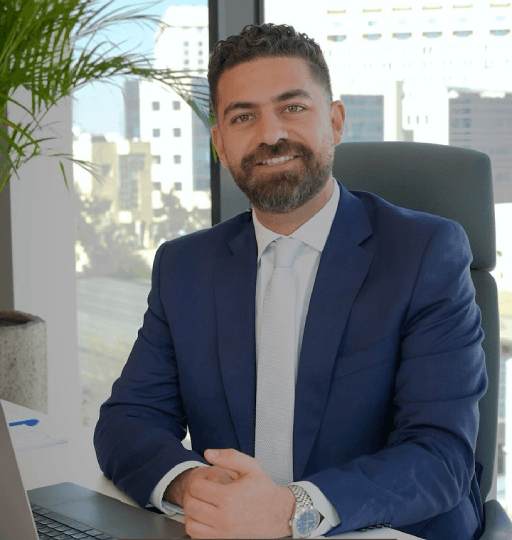
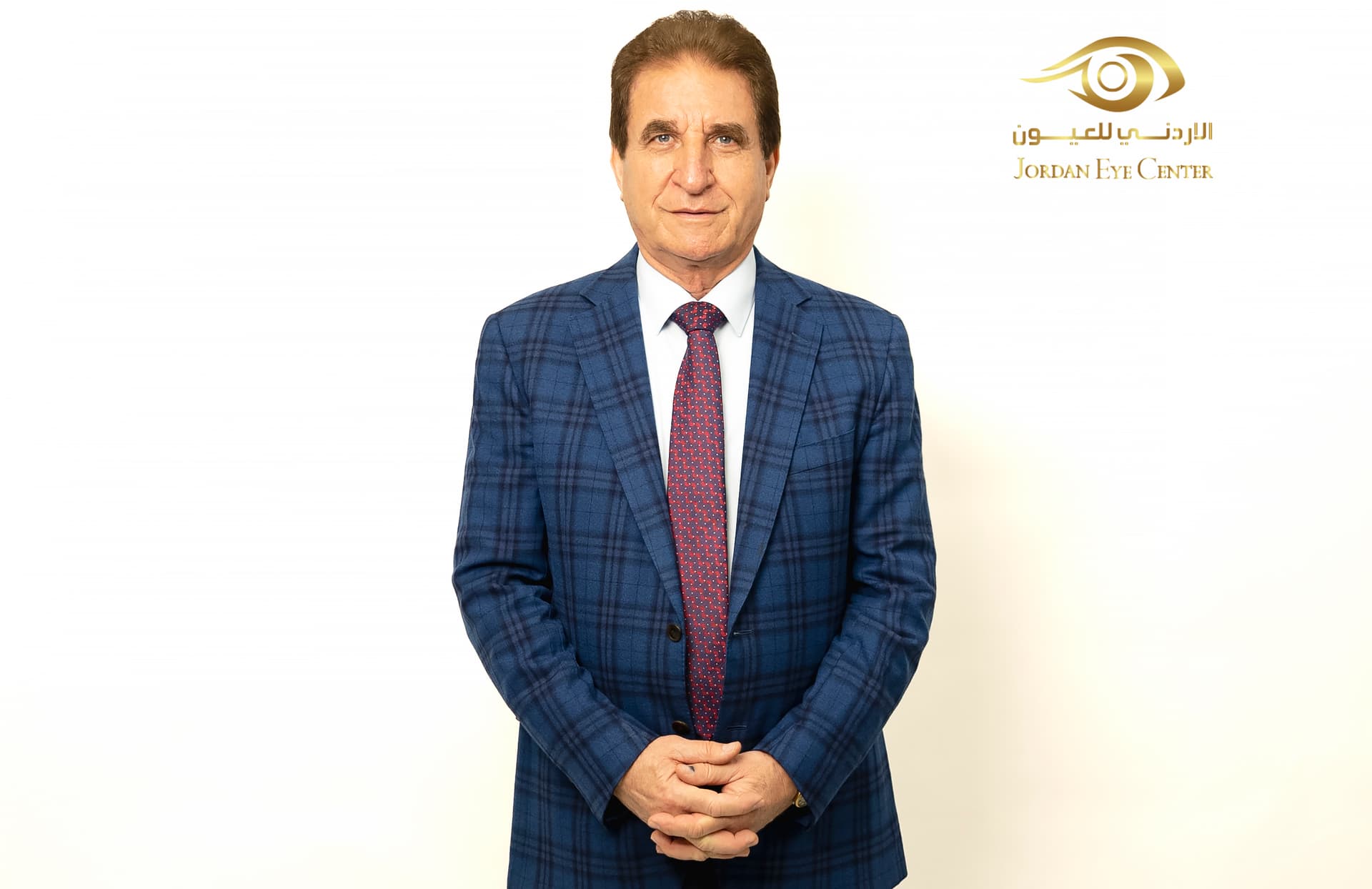
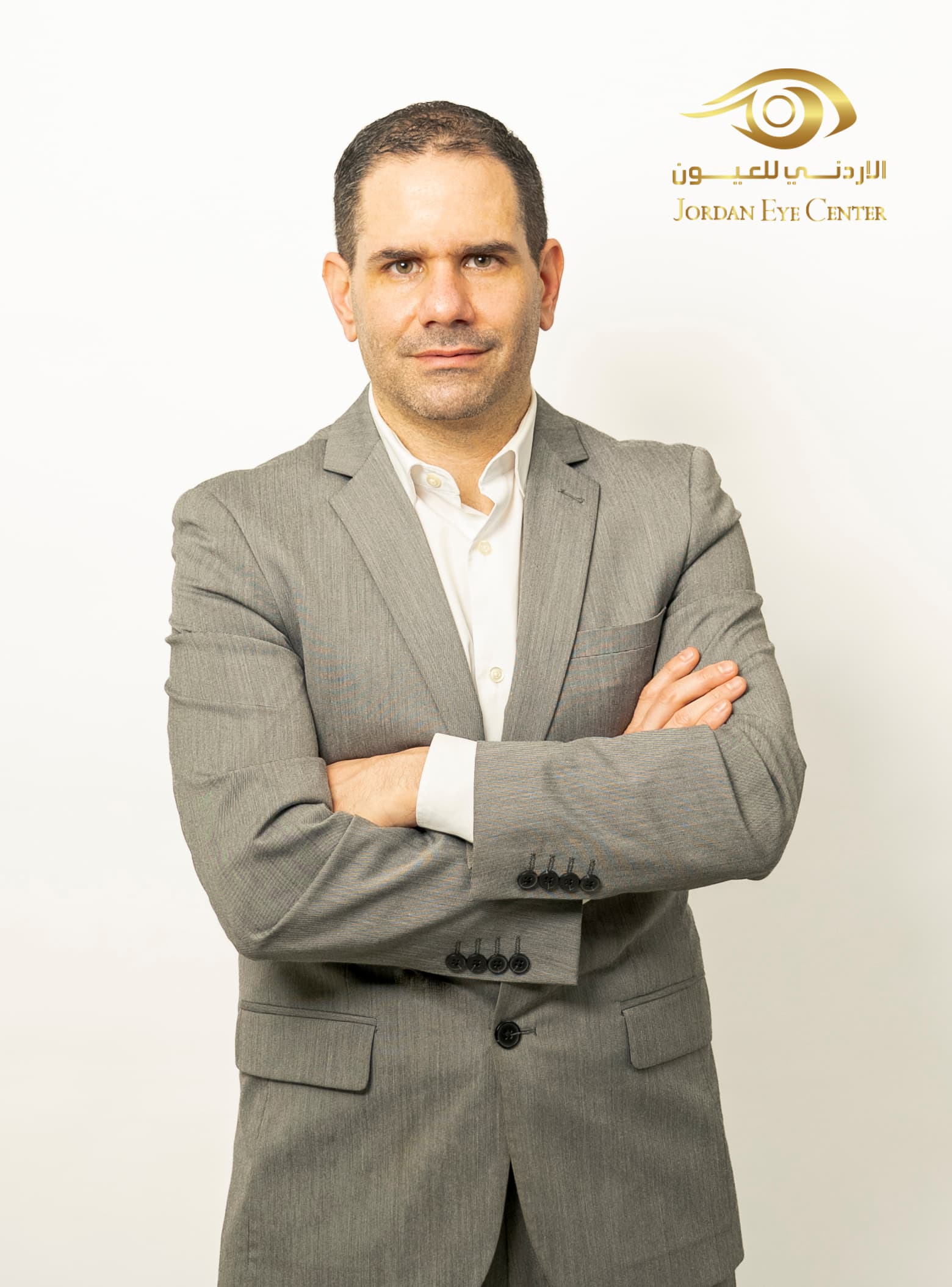
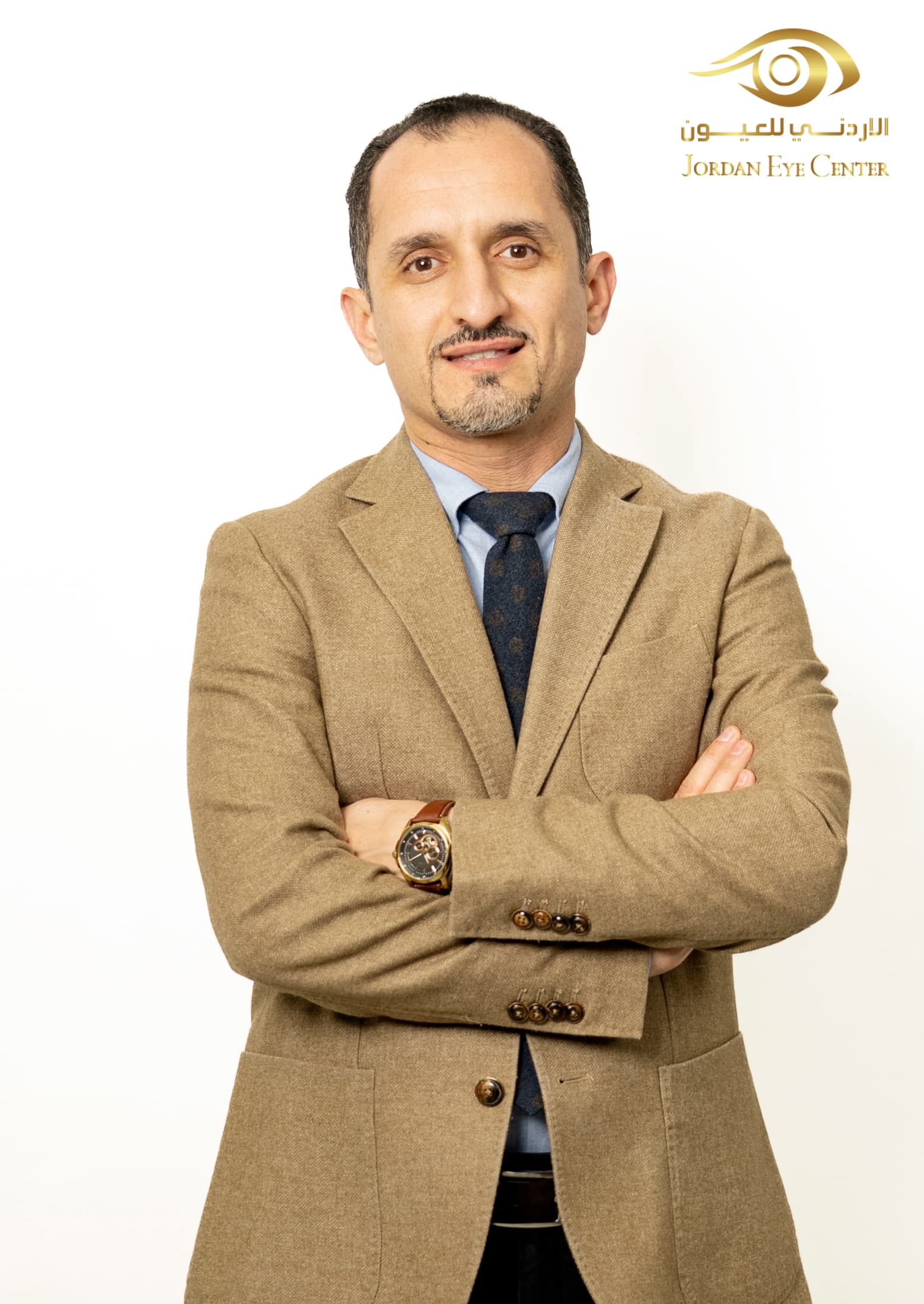
Dr. Muataz Mohammad Harara is a consultant ophthalmologist and vitreoretinal surgeon at Jordan Eye Center on Mecca Street. He holds the Arab Board and the Jordanian Board in Ophthalmology and an International Council of Ophthalmology qualification. His published services combine refractive options, including laser vision correction, implantable vision-correction lenses and corneal cross-linking, with retinal assessment and treatment, intravitreal injections, cataract surgery with lens implantation and corneal transplantation (keratoplasty). His biography notes that examination guides the choice of treatment. Confirmed hours are Saturday to Wednesday 08:00–19:00 and Thursday 08:00–16:00.
Suits: Patients wanting refractive options alongside retina and cornea care
Dr. Mais Khaled Al Jbour is an ophthalmologist at Jordan Eye Center on Mecca Street. She studied medicine at the Hashemite University and holds the Arab Board in Ophthalmology and FICO. Her biography also mentions training in the Royal Medical Services and a Royal College of Surgeons of Edinburgh credential. Alongside laser vision correction and implantable vision-correction lenses, her listed services cover cataract surgery with lens implantation, paediatric eye care, strabismus surgery, tear-drainage care, and oculoplastic and aesthetic eyelid surgery. Confirmed hours are Saturday to Wednesday 08:00–19:00 and Thursday 08:00–16:00.
Suits: Families seeking vision correction plus children's, squint and eyelid care
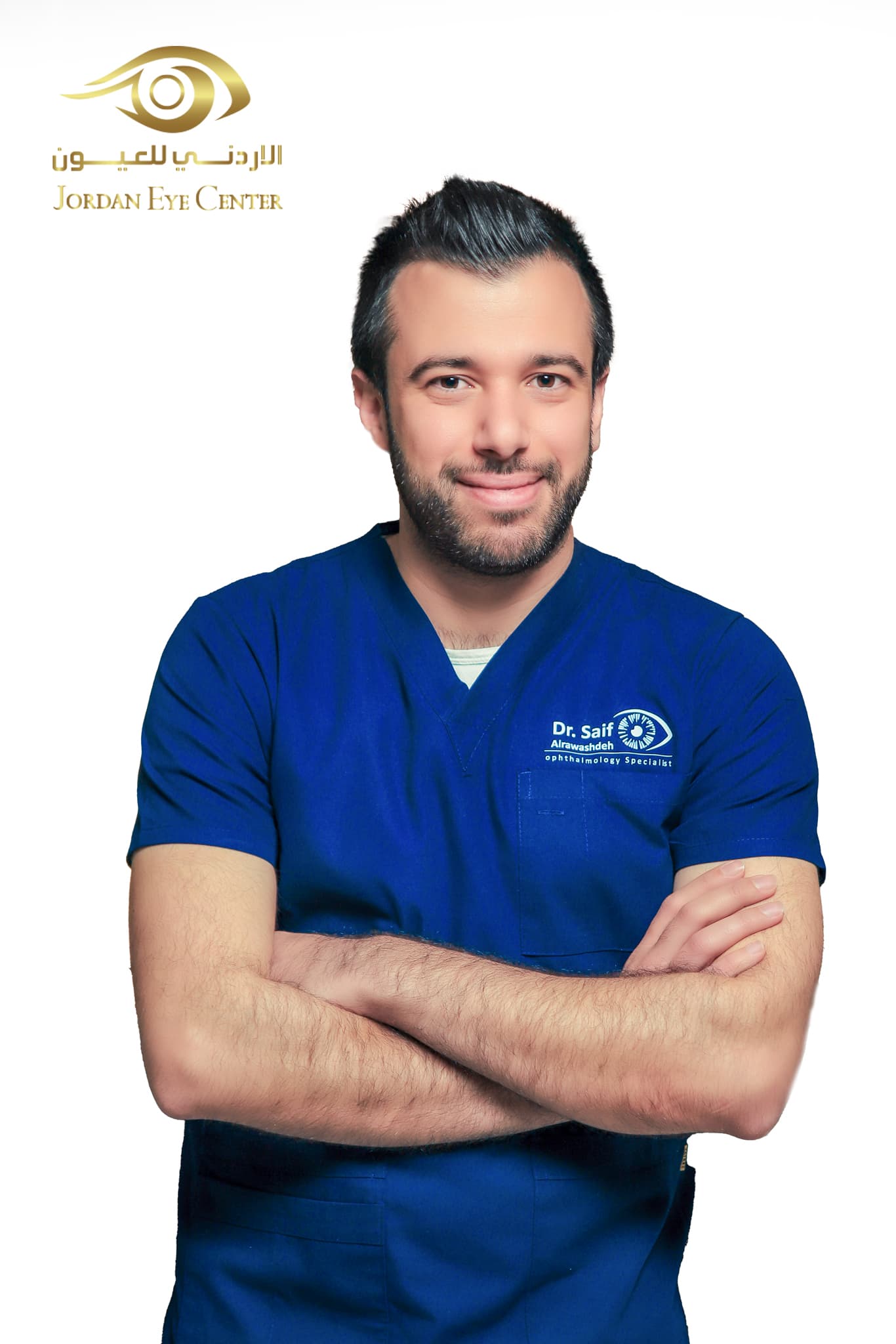
Dr. Saif Al Rawashdeh is an ophthalmology specialist at Jordan Eye Center on Mecca Street and a graduate of Jordan University of Science and Technology. He holds the Arab Board in Ophthalmology and FICO, and his biography states membership of the Jordanian ophthalmology society. His published services include laser and LASIK vision correction, cataract surgery, intraocular lens implantation, strabismus surgery and treatment of children's vision problems. According to his profile, appointments are coordinated according to the eye condition and the doctor's availability. Confirmed hours are Saturday to Wednesday 08:00–19:00 and Thursday 08:00–16:00.
Suits: LASIK enquiries and children's or squint care on Mecca Street
Dr. Yazan Abdulkarim Shabaneh Al Tamimi practises at Shami Eye Center at the 7th Circle. He studied medicine (2008) and completed higher specialty training in ophthalmology (2013) at Jordan University of Science and Technology. He holds the Jordanian Board in Ophthalmology (2013) and FRCS Glasgow (2019). He also completed anterior segment and cataract fellowship training (2021) and glaucoma surgery fellowship training (2022) at King's College Hospital in London. His services include laser vision correction, astigmatism treatment, corneal topography and imaging, dry eye treatment, phacoemulsification cataract surgery, glaucoma care and diabetic eye screening. Confirmed hours are Saturday to Wednesday 09:00–17:00 and Thursday 09:00–14:00.
Suits: Vision correction questions alongside glaucoma, dry eye or astigmatism concerns
Dr. Khaled Sharif is a consultant ophthalmologist and medical director of Sharif Eye Centers, and sees patients at the Amman branch in Jabal Amman. He holds fellowships of the Royal College of Surgeons in Glasgow and the Royal College of Ophthalmologists in London. His biography notes that he co-authored an atlas of corneal dystrophies and degenerations with T. A. Casey and has trained ophthalmic surgeons in refractive procedures. His published services include LASIK and laser vision correction, corneal topography, corneal cross-linking and keratoconus treatment, permanent lens implantation, keratoplasty and cataract surgery. Confirmed hours are Saturday to Thursday 09:00–22:00, with individual sessions confirmed by the centre.
Suits: Corneal or keratoconus concerns; evening appointments in Jabal Amman
Dr. Amer Hajjaj runs his own ophthalmology clinic at the Fifth Circle. He graduated in medicine from the University of Jordan and completed his ophthalmology residency at the Jordanian Royal Medical Services. He holds the Jordanian and Arab Boards in Ophthalmology, Fellowship of the International Council of Ophthalmology and Membership of the Royal College of Surgeons of Edinburgh. His listed services include LASIK and PRK vision correction, comprehensive eye examinations, contact lens fitting, and keratoconus assessment and treatment. They also cover cataract removal with lens implantation, glaucoma care, dry eye and diabetic eye care, and children's vision, strabismus and amblyopia care. Confirmed hours are Saturday to Wednesday 09:00–18:30 and Thursday 09:00–15:00.
Suits: Comparing LASIK and PRK, or whole-family eye care, Fifth Circle
Dr. Khalaf Houshan works within the Jordan Eye Center team on Mecca Street. His practice focuses on laser vision correction, cataract surgery and lens implantation. His record lists postgraduate ophthalmic study and microsurgical training in Moscow, and his biography states that he obtained his doctorate in microsurgery for myopia at the Fyodorov Eye Microsurgery Center in Moscow. His published services include assessment for laser and LASIK vision correction, intraocular lens implantation, and assessment and treatment of childhood amblyopia (lazy eye). His profile notes that suitability for refractive correction is discussed after examination. Confirmed hours are Saturday to Wednesday 08:00–19:00 and Thursday 08:00–16:00.
Suits: Short-sighted adults exploring laser correction; lazy eye assessment
Dr. Yazan Salameh is described as a senior ophthalmology specialist at Jordan Eye Center on Mecca Street. He is a fellow of the European Board of Ophthalmology, and his biography states membership of the American refractive surgery society. His practice focuses on refractive correction, cataract surgery and lens implantation. His published services include assessment of vision-correction options, LASIK and femtosecond LASIK, multifocal lens implantation and implantable vision-correction lenses. His biography also mentions ultra-LASIK and notes that eye measurements and corneal assessment inform the choice of procedure. Confirmed hours are Saturday to Wednesday 08:00–19:00 and Thursday 08:00–16:00.
Suits: Comparing LASIK types, implantable lenses or multifocal lens options
Every matching doctor profile in this area was scored out of 100 for how complete and checkable its published information is, and the highest scores appear here in order. Featured placement does not change a profile's score, and the score does not measure treatment quality or outcomes — it tells you how much you can check before you call.
Ties are broken by the number of approved reviews, then published years of experience. Confirm the service, branch, appointment, fees and insurance coverage with the practice before visiting.
Vision correction procedures aim to reduce your dependence on glasses or contact lenses by correcting refractive errors: short-sightedness (myopia), long-sightedness (hyperopia) and astigmatism. LASIK and PRK reshape the cornea with a laser. Implantable lenses and lens replacement correct focus inside the eye instead. Corneal cross-linking is a separate procedure. It aims to strengthen a thinning, weakening cornea, as in keratoconus, rather than to remove the need for glasses.
It may be worth booking a refractive assessment if:
These procedures are not right for everyone. A changing prescription, pregnancy, some corneal shapes, a thin cornea, significant dry eye and certain general health conditions can rule a procedure out or call for a different one. Laser correction also does not prevent the need for reading glasses that most people develop from their forties onwards. If your vision has recently become blurry, start with a full eye examination rather than a surgery consultation.
Call 911 or go to the nearest emergency department straight away if you notice:
After any eye procedure, contact the treating clinic urgently if pain gets worse, vision drops, or redness or discharge increases.
People searching for the best LASIK & vision correction specialists in Amman usually find that there is no single right answer. The more useful question is which doctor matches your eyes and your practical needs. Use the published details to narrow your choice:
The list order reflects how complete each profile is, not clinical quality. Treat it as a starting point for your own comparison.
A refractive assessment is usually longer and more detailed than a routine eye test. It often includes measuring your prescription, mapping the shape and thickness of your cornea, checking your tear film and examining the inside of the eye. Your pupils may be dilated with drops, so plan for blurred vision for a few hours afterwards and do not drive yourself home.
Ask the clinic directly what the consultation costs and what it includes. A full refractive assessment may be priced separately from a standard consultation. If you go ahead, ask for a clear written breakdown of the procedure cost, including follow-up visits and medication.
For insurance, check with both your insurer and the clinic before booking. Many policies treat vision correction differently from medical eye care, so confirm whether the assessment, the procedure or neither is covered. Also ask whether you need pre-approval.
When booking at a multi-doctor centre, name the specific doctor you want. Ask how long the assessment visit lasts, and whether dilating drops will be used so you can arrange transport.
The doctors on this page practise at four addresses, as listed in their profiles:
Whether you are coming from Sweifieh, Khalda, Tla' Al-Ali, Dabouq, Abdoun, Shmeisani, the Gardens or Jubeiha, check the map location on each profile and allow extra time for Amman traffic at peak hours. Because assessments may involve dilating drops, it is safer to take a taxi or bring a companion who can drive.
This page helps you compare published profiles; it is not medical advice and does not rank clinical skill. In an emergency call 911 or go to the nearest emergency department.