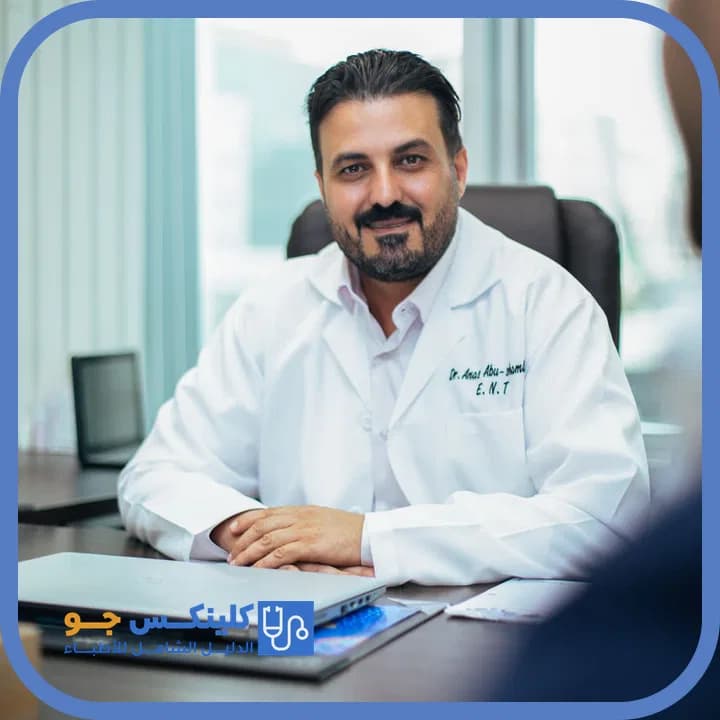
Nasal polyp treatment Doctors in Jordan — A man experiencing ear discomfort — directory of the best Nasal polyp treatment doctors in Jordan

Nasal polyp treatment Doctors in Jordan

علاج لحمية الأنف

Nasal polyps are soft, pale or grey fleshy growths that are painless to touch and arise from chronically inflamed mucosa in the nose and sinuses, hanging down into the airway. They are a manifestation of chronic mucosal inflammation rather than a simple lump that can just be trimmed away, which is why the underlying inflammation is treated alongside removal of the growth itself.

An important clarification prevents a very common confusion: in everyday Arabic the same word is used for two entirely different things. The first is nasal polyps, mostly in adults, which are inflammatory tissue. The second is the adenoid behind the nose in children, normal lymphoid tissue that enlarges and causes snoring, mouth breathing and middle ear fluid. Treatment differs completely between the two, so information about one must not be applied to the other.

Typical symptoms of polyps include persistent nasal obstruction that does not alternate between sides, reduced or absent sense of smell, which is often the patient's most prominent complaint, anterior or posterior nasal discharge, and facial heaviness. Polyps are frequently associated with asthma, aspirin sensitivity and chronic rhinosinusitis, so the patient is assessed as a whole rather than the nose in isolation. Diagnosis rests on nasal endoscopy, completed by CT imaging when surgery is being planned.

Treatment begins medically and continues medically: a regular topical intranasal steroid spray with saline irrigation, a short oral steroid course in selected cases at the clinician's decision, and control of asthma and allergy. Endoscopic surgery is performed for severe obstruction, loss of smell or failure of medical treatment, and modern biologic therapies exist for specific cases and are decided with a specialist. Decongestant drops are not a treatment for polyps; they do not shrink them and they cause rebound congestion.

The limits stated frankly: surgery removes polyps but does not stop the inflammation that produced them, and recurrence is common, particularly if topical treatment is stopped afterwards. Surgery is therefore described as a step that opens the route for medication rather than an endpoint. The sense of smell may improve only partially, or not at all if it has been absent for a long time. Features requiring urgent assessment because they may not be a simple polyp include a growth on one side only, repeated nosebleeds, severe facial pain, cheek numbness, double vision or a protruding eye, and a clear watery leak from the nose. Suitability for any treatment is determined by clinical examination and nasal endoscopy.

14 specialists

Procedure steps

  1. 1

    Full assessment and nasal endoscopy

    The clinician documents the duration of obstruction, the state of smell, discharge and facial heaviness, asks about asthma and aspirin sensitivity, then inspects inside the nose endoscopically to establish the site, size and side of the polyps.

  2. 2

    Supporting investigations

    Allergy testing and assessment of respiratory function may be requested where asthma is present, and a CT scan to define the extent of sinus disease. A unilateral growth calls for closer evaluation and possibly a biopsy.

  3. 3

    Structured topical treatment

    A regular topical steroid spray with saline irrigation and correct technique is started, alongside control of asthma and allergy. This treatment is long term by nature and requires consistency rather than intermittent courses.

  4. 4

    Endoscopic surgery when required

    For severe obstruction, loss of smell or failure of medical therapy, polyps are removed and drainage pathways widened endoscopically. Risks and the possibility of recurrence are explained beforehand, and the operation is planned on the CT images.

  5. 5

    Ongoing treatment and endoscopic follow-up

    After surgery saline irrigation and the topical spray continue, and the mucosa is monitored endoscopically to detect recurrence early. In selected cases biologic therapy is considered with a specialist.

Before the procedure

Before the appointment, establish when the obstruction began, whether it affects both sides or only one, and when and how much your sense of smell changed. Bring a list of every spray, tablet, oral steroid course and antibiotic you have used and for how long, together with any CT scan or report of previous nasal surgery. Tell the doctor if you have asthma or sensitivity to aspirin and anti-inflammatory drugs, if you have a clotting disorder or take a blood thinner, and about diabetes, immune disease, and cigarette or waterpipe smoking. Stop using fast-acting decongestant sprays and mention if you have been relying on them. Nasal endoscopy needs no fasting and is done in the clinic with a topical anaesthetic spray. If the growth is on one side only or is accompanied by nosebleeds, say so at the start of the visit.

After the procedure

Continue the topical spray and saline irrigation for the full period prescribed and do not stop them once breathing improves, since recurrence after stopping is the commonest pattern in this condition. Aim the spray outwards, away from the septum, to reduce irritation and nosebleeds, and keep asthma and allergy well controlled, as they are part of the same disease process. After endoscopic surgery, expect blockage, crusting, lightly blood-stained discharge and a temporary reduction in smell for around two weeks; follow the frequent saline irrigation regimen and avoid forceful nose blowing, bending, heavy lifting and swimming for the period your surgeon specifies, and put nothing into the nose. Seek urgent care for heavy nosebleeding that does not stop with pressure, a persistent clear watery drip from the nose, swelling or redness around the eye, double vision or reduced vision, high fever with severe headache or neck stiffness, cheek numbness, or rapid return of obstruction with one-sided bleeding.

Expected duration

An assessment visit with nasal endoscopy usually takes 20 to 40 minutes; endoscopic surgery, when needed, generally takes one to two hours depending on the extent of disease.

Doctors who provide Nasal polyp treatment

Dr. Humam Al Riyalat ENT Clinic

Humam Al Riyalat practices ENT medicine in Amman. Consultations assess hearing, nose, throat and upper-airway symptoms and review investigations to discuss asse…

Sign in to the platform to view the phone number
137 viewsHours 12:00–17:00 · 6 days a weekInsurance not specified
Dr Anas Abu Shamleh ENT Clinic

Dr Anas Abu Shamleh is an ENT specialist and consultant in rhinoplasty and endoscopic sinus surgery in Amman, holding the Jordanian Board in ENT surgery. His pr…

Sign in to the platform to view the phone number
254 viewsHours 10:00–17:00 · 6 days a weekInsurance not specified
Specialist ENT Clinics

Ali Shatnawi is part of the Specialist ENT Clinics team in Irbid. The center’s care includes ENT consultations, tonsil and adenoid concerns, nasal septal deviat…

Sign in to the platform to view the phone number
30 years of experience181 viewsHours 12:00–17:00 · 7 days a weekInsurance not specified
Dr. Islam Al Ziadneh ENT Clinic

Islam Al Ziadneh practices ENT medicine at Al Basma Medical Complex on Abu Firas Al Hamdani Street in Jabal Amman. Consultations address nose, ear and throat co…

Sign in to the platform to view the phone number
177 viewsHours 10:00–17:00 · 6 days a weekInsurance not specified
Yousef Anis Al Safarini Clinic

Dr. Yousef Anis Al Safarini is an ENT specialist on Al Saadeh Street in Zarqa. Consultations assess ear, hearing, nasal, sinus and throat concerns and determine…

Sign in to the platform to view the phone number
220 viewsHours 10:00–17:00 · 6 days a weekAccepts health insuranceAccepted insurers
Jordan Hospital and Medical Centre Outpatient Clinics

Dr Ziad Mohammad Al Balbisi is a consultant ENT surgeon at Jordan Hospital in Amman. He graduated in Alexandria and holds a fellowship of the Royal College of S…

Sign in to the platform to view the phone number
145 viewsHours 10:00–17:00 · 6 days a weekAccepts health insuranceAccepted insurers
Hassan Al-Tawalbeh ENT Clinic

Hassan Al-Tawalbeh practises ENT care in Irbid at Hassan Al-Tawalbeh ENT Clinic. The practice reception coordinates appointment times and the requested consulta…

Sign in to the platform to view the phone number
10 years of experience180 viewsHours 10:00–17:00 · 6 days a weekInsurance not specified
King Abdullah University Hospital Specialty Outpatients

Patients can arrange a ent surgery consultation with Dr Majid Khaleel Bani-Ata at King Abdullah University Hospital in Irbid. Qualifications include Jordanian B…

Sign in to the platform to view the phone number
127 viewsHours 10:00–17:00 · 6 days a weekInsurance not specified
Dr. Imad Hussein Abu Romeh ENT Clinic

Imad Hussein Abu Romeh is an ENT surgery specialist in Amman. His qualifications include a medical degree from Cairo University, the Jordanian Board in otolaryn…

Sign in to the platform to view the phone number
227 viewsHours 10:00–18:00 · 6 days a weekInsurance not specified
Abdali Hospital Outpatient Clinics

Dr Ayman Jaber practices ENT medicine and surgery alongside nasal and facial reconstruction at Abdali Hospital in Amman. He holds Jordanian ENT board certificat…

Sign in to the platform to view the phone number
168 viewsHours 10:00–17:00 · 6 days a weekInsurance not specified
Dr. Ibrahim Mohammad Al Nawaiseh — ENT (Ear, Nose & Throat) Clinic

Ibrahim Mohammad Al Nawaiseh practices ENT medicine at Hassan Al Bardini Complex near Dalla Roundabout in Marj Al Hamam. Use the practice contact to arrange rev…

Sign in to the platform to view the phone number
205 viewsHours 09:00–16:00 · 6 days a weekInsurance not specified
JoSante Healthcare Center — Amman Branch

Dr Sultan Saad Jaber is an ENT surgery specialist who graduated from Misr University for Science and Technology and trained with the Jordanian Royal Medical Ser…

Sign in to the platform to view the phone number
216 viewsHours 08:00–19:00 · 7 days a weekInsurance not specified
Al Khalidi Medical Plaza

Dr. Majdi Abdul Kareem is an ENT consultant with a professional focus on endoscopic sinus surgery. His qualifications include British and American ENT fellowshi…

Sign in to the platform to view the phone number
25 years of experience274 viewsHours 09:00–18:00 · 6 days a weekInsurance not specified

Finding Nasal polyp treatment services in Jordan

Which doctors are listed for Nasal polyp treatment in Jordan?

There are currently 14 doctor profiles linked to Nasal polyp treatment on ClinicsJo. Review the listed services and contact the practice to confirm availability with the doctor and branch you choose.

How can I find an appointment for Nasal polyp treatment?

Start with an available doctor's profile and use the contact or booking options shown there. Confirm the service, practice location and appointment time with the clinic. If this list is empty, broaden your search using the directory links on this page.

What does Nasal polyp treatment cost in Jordan?

Ask the practice for the current price and what it includes. A consultation fee shown on a profile is not necessarily the price of a procedure, tests or follow-up. Confirm any additional charges and insurance arrangements before your visit.

How much does Nasal polyp treatment cost in Jordan?

No clinic on ClinicsJo has published a price for Nasal polyp treatment yet, so we do not quote an estimated figure. What is published is the consultation fee: 15–30 JOD (profiles: 18). The doctor sets the treatment price after assessing your case.

What clinics and doctors have published on ClinicsJo

Other doctor profiles with a published fee: 13.

What sets the price of Nasal polyp treatment?

  • The consultation fee and follow-up visits
  • Tests and investigations needed
  • The chosen treatment approach and its duration
  • Medicines or supplies
  • Insurance coverage and your share of the cost

Expected duration (from the procedure guide): An assessment visit with nasal endoscopy usually takes 20 to 40 minutes; endoscopic surgery, when needed, generally takes one to two hours depending on the extent of disease.

How to ask about the price

Before booking, ask the clinic for the all-inclusive price and what it covers, any extra tests or scans, how many follow-up visits are included, the payment options, and whether your insurance is accepted. You can reach them through the contact details on the doctor and clinic profiles on this page.

The figures above were published by the clinics and doctors themselves on ClinicsJo and may change. We do not estimate prices. Confirm the all-inclusive price with the clinic before booking. Offers on ClinicsJo