
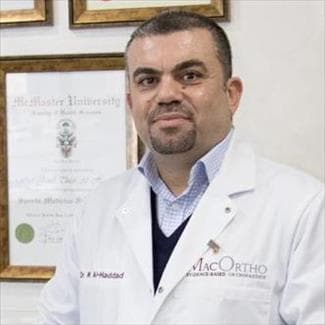
Dr. Wael Al Haddad Orthopaedic Clinic
Dr. Wael Al Haddad is a consultant orthopedic surgeon with Jordanian and Arab Board certification and advanced training at McMaster University in Canada. His wo…
Hours not listedInsurance not specified6 views
Trusted medical platform in Jordan
اصلاح الرباط الصليبي الأمامي
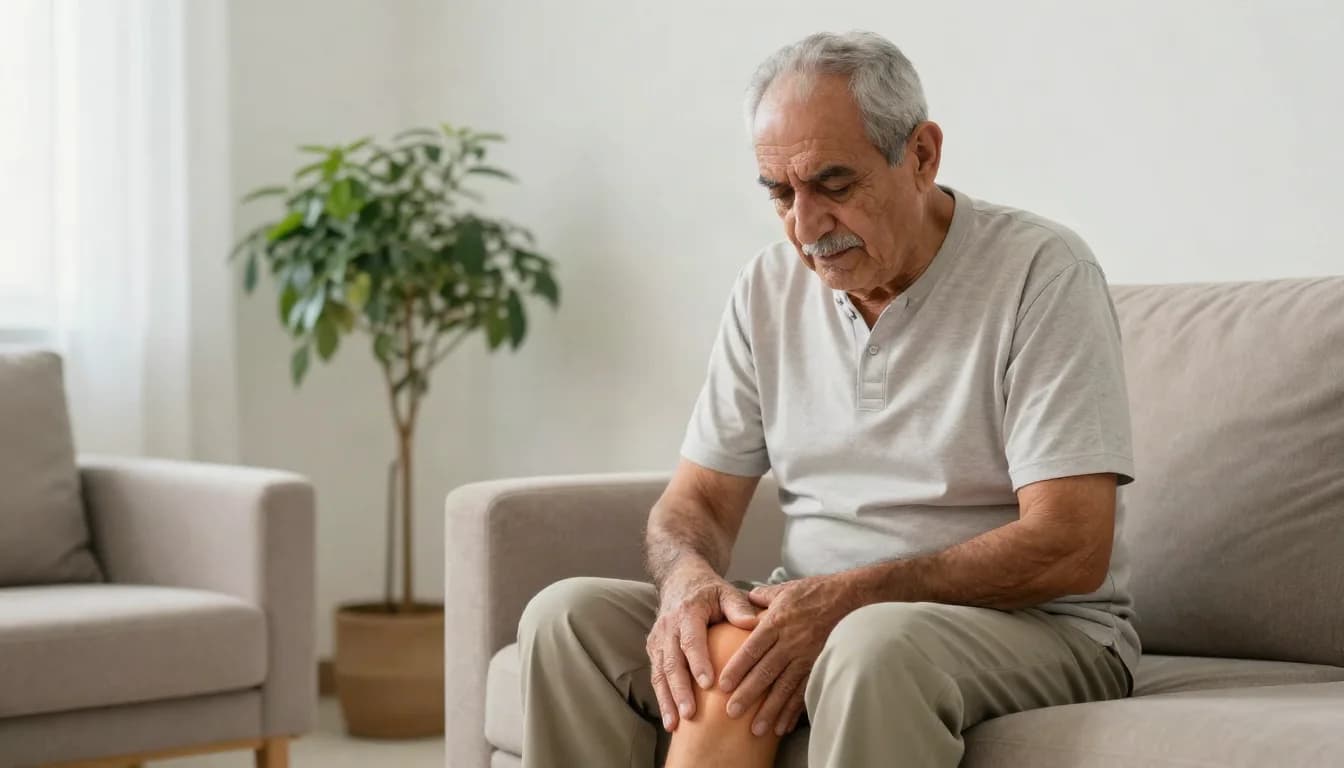
The anterior cruciate ligament is one of the knee’s internal ligaments; it prevents the shin bone sliding forward and limits excess rotation, making it the anchor of stability during cutting, jumping and landing. Its fibres usually tear in a sporting injury with a sudden twisting movement or bad landing, and the injured person reports a pop, rapid swelling, then a sense that the knee is unstable and “gives way” on turning. A torn ligament does not heal on its own, so the operation is a **reconstruction** rather than a simple repair: a tendon graft from the patient — usually the hamstring tendons or the patellar tendon — is fixed in bone tunnels in the thigh and shin to take over the original ligament’s function, performed arthroscopically through small portals. The meniscus and joint cartilage are assessed in the same session and treated as needed. The decision to operate is not automatic for every tear. Someone whose activities involve no cutting or pivoting sport and whose knee is stable may be managed with rehabilitation and muscle strengthening. Athletes, those with recurrent instability, or those whose tear is combined with a meniscal tear needing repair are better served by surgery to protect the joint from future wear. The fact that most changes the outcome: **rehabilitation is half the treatment**. The final result depends on a structured physiotherapy programme running for months — not on the operation alone — and return to contact sport is decided by strength and balance criteria, not by elapsed time.
Specific stability tests of the knee, with MRI to confirm the tear and assess the meniscus, joint cartilage and other ligaments.
Swelling is reduced and range of motion and muscle strength restored before surgery, because operating on a stiff swollen knee slows recovery and increases post-operative stiffness.
The graft is harvested from the patient’s own tendons (usually hamstring or patellar) and prepared to appropriate thickness and length; graft options are discussed with the patient beforehand.
Bone tunnels are drilled in femur and tibia at positions replicating the ligament’s anatomical course, the graft is passed and secured with fixation devices, and any meniscal tear is addressed.
Graded phases: restoring range and muscle control, then strength, then power and agility, then functional testing that governs return to sport by criteria rather than by time.
Tell your surgeon about medications, chronic conditions and any previous knee injury or surgery, and discuss graft options and how each affects recovery. Take pre-operative rehabilitation seriously — restoring range of motion and quadriceps strength before surgery improves the final result. Stop smoking, as it affects soft tissue and bone healing. Arrange crutches and sleeping arrangements that avoid frequent stairs, and someone to accompany and help you in the first days. Ask explicitly about the expected rehabilitation timeline, the criteria that will govern your return to sport, and the plan for clot prevention.
Elevate the leg and apply ice intermittently to limit swelling in the first days, and follow the weight-bearing, brace and crutch instructions exactly as your surgeon specified. Begin ankle pumps and quadriceps activation early as your therapist advises; discipline in physiotherapy is what determines your final outcome. Do not return to pivoting or contact sport simply because pain has gone — returning before strength and balance are restored is among the commonest causes of re-tear. Seek urgent care for severe calf pain, sudden leg swelling or breathlessness (possible clot), fever, redness or wound discharge, or increasing stiffness preventing knee extension.
60–120 minutes, usually with same-day discharge; rehabilitation takes 6–12 months
Dr. Wael Al Haddad is a consultant orthopedic surgeon with Jordanian and Arab Board certification and advanced training at McMaster University in Canada. His wo…
There are currently 1 doctor profiles linked to ACL Reconstruction on ClinicsJo. Review the listed services and contact the practice to confirm availability with the doctor and branch you choose.
Start with an available doctor's profile and use the contact or booking options shown there. Confirm the service, practice location and appointment time with the clinic. If this list is empty, broaden your search using the directory links on this page.
Ask the practice for the current price and what it includes. A consultation fee shown on a profile is not necessarily the price of a procedure, tests or follow-up. Confirm any additional charges and insurance arrangements before your visit.