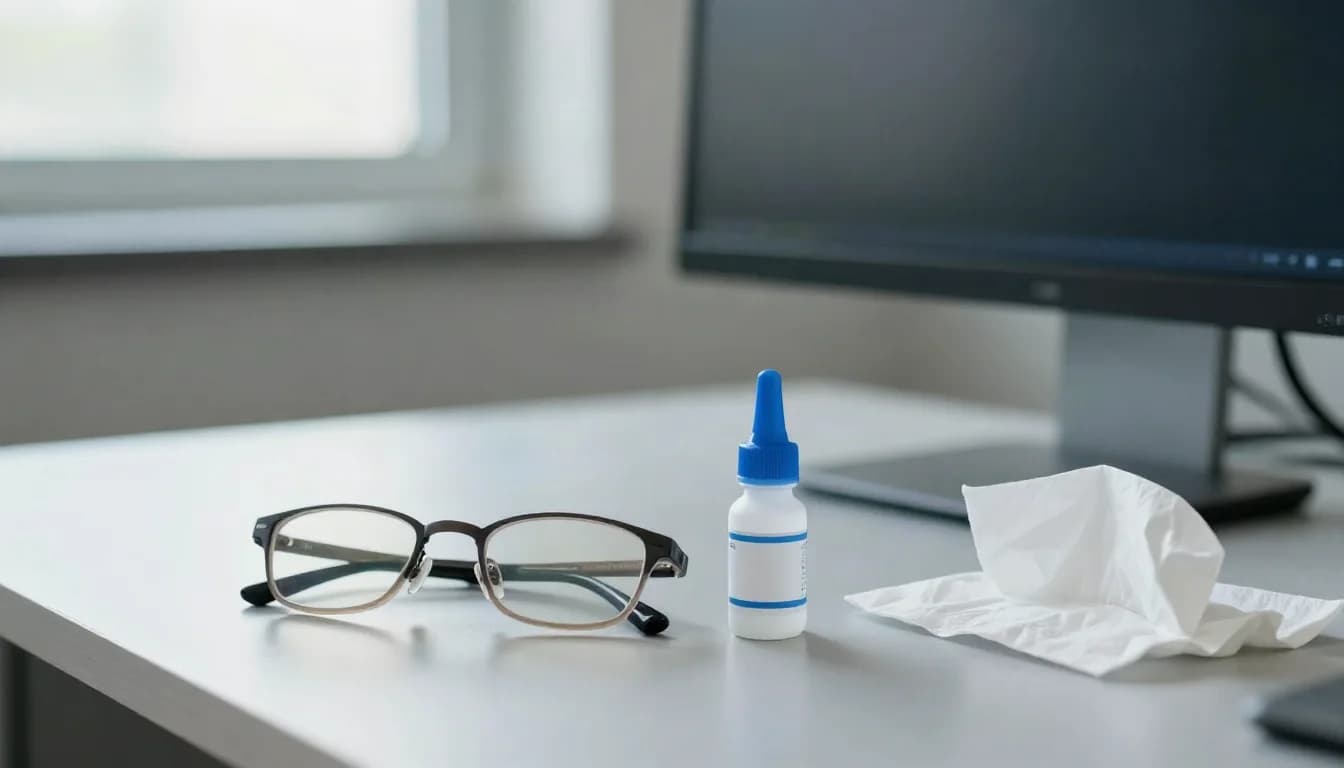
A red eye is a sign, not a diagnosis. It means the small blood vessels of the conjunctiva or of the tissue around the cornea have dilated in response to inflammation, dryness, allergy, injury, or raised eye pressure. Treating a red eye properly therefore means identifying the underlying cause and directing treatment at it, rather than masking the colour.
Common and benign causes include viral, bacterial, or allergic conjunctivitis, dry eye and prolonged screen use, irritation from contact lenses, dust, smoke, or air conditioning, and inflammation of the eyelid margin. More serious conditions share the same sign: a corneal abrasion or ulcer, iritis, acute angle-closure glaucoma, and penetrating eye injury. A sharply bordered bright red patch with no pain and no drop in vision is usually a subconjunctival haemorrhage, which looks alarming but fades on its own over roughly one to three weeks.
The examination is what separates these possibilities. It includes measuring vision in each eye separately, checking pupil shape and reaction, measuring intraocular pressure, and examining the surface under the slit lamp with fluorescein dye to reveal any abrasion, ulcer, or foreign body hidden under the lid. Whether any particular drop or procedure suits you is decided by that clinical examination, not by reading a page or copying a relative's treatment.
Treatment follows the cause: lubricants and artificial tears for dryness, topical antihistamines for allergy, topical antibiotics only for bacterial infection, and supportive care for viral conjunctivitis, where antibiotics add nothing. Some limits deserve plain language. Over-the-counter whitening drops constrict vessels temporarily, and redness typically rebounds more strongly with repeated use; they treat nothing. Steroid drops used without supervision can raise eye pressure and turn a herpes corneal infection into a sight-threatening ulcer. Never use another person's drops or leftover antibiotics from a previous episode.
Viral conjunctivitis spreads easily through hands, towels, and close contact, and often moves through a household or classroom as a wave. Frequent hand washing, a dedicated towel and pillowcase, and stopping contact lenses shorten that wave more than any drop.
1 specialists
Procedure steps
1
History taking and red-flag triage
The doctor asks how long the eye has been red and which eye started, whether there is true pain or only itching, the nature of any discharge, any loss of vision or light sensitivity, any injury or exposure to dust or chemicals, contact-lens use and previous drops, and any associated immune, joint, or skin disease.
2
Visual acuity and intraocular pressure
Vision is measured in each eye separately, the pupil and its reaction are checked, and intraocular pressure is measured. Reduced vision or raised pressure immediately moves the case from simple surface irritation to a problem needing same-day management.
3
Slit-lamp examination with fluorescein
The lids, conjunctiva, and cornea are examined under high magnification. A dye drop is then applied, which reveals any abrasion or ulcer under blue light, and the upper lid is everted if a hidden foreign body is suspected. Circumcorneal congestion and inflammatory cells inside the eye are also assessed.
4
Establishing the cause and the treatment plan
Based on the findings, cause-directed treatment is prescribed, contact lenses are stopped temporarily, and the expected time to improvement is explained along with the signs that the plan is not working. Cases needing a corneal specialist or emergency care are referred immediately.
5
Follow-up and adjustment
A very early review is scheduled when there is a corneal ulcer, iritis, or raised pressure, and a later one for simple irritation. Vision and pressure are rechecked whenever steroid drops are used, and any deterioration before the appointment means coming back immediately rather than waiting.
Before the procedure
Do not wear contact lenses on the day of your appointment, and bring the case, the solution, and every drop you have used, including expired ones. Tell the doctor about each drop and how long you used it, especially steroid drops, and about any injury or exposure to dust or chemicals and exactly when it happened. Mention your chronic illnesses, medications, and allergies, and any joint inflammation, immune disease, psoriasis, or skin inflammation. Do not rub the eye or apply hot compresses before the examination, and never use a family member's drops. If the redness comes with reduced vision or severe pain, or followed an injury, do not wait for an appointment and go to the emergency department. Bring your glasses and previous reports, and if the patient is a child, say whether anyone at home or in class has the same complaint.
After the procedure
Use the drops in the order and at the intervals you were given, leave about five minutes between different drops, and never touch the bottle tip to your eye or fingers. Wash your hands before and after instilling drops, keep a towel and pillowcase for your own use if the cause is infectious, and avoid swimming pools and shared eye products. Stop contact lenses until your doctor allows them again, and discard old lenses and their case if there was any corneal infection. Cool compresses relieve allergy and warm compresses help lid-margin disease; never put home remedies into the eye. Complete the full course even if you improve early. **Seek immediate care or go to the emergency department if you develop severe eye pain, reduced or blurred vision, marked light sensitivity, a deep red ring of congestion around the cornea, haloes with headache, nausea and vomiting, heavy purulent discharge in a newborn, or no improvement after several days of correct treatment.**
Expected duration
The diagnostic visit usually takes 15 to 30 minutes, and simple irritation typically settles within 3 to 10 days depending on the cause.
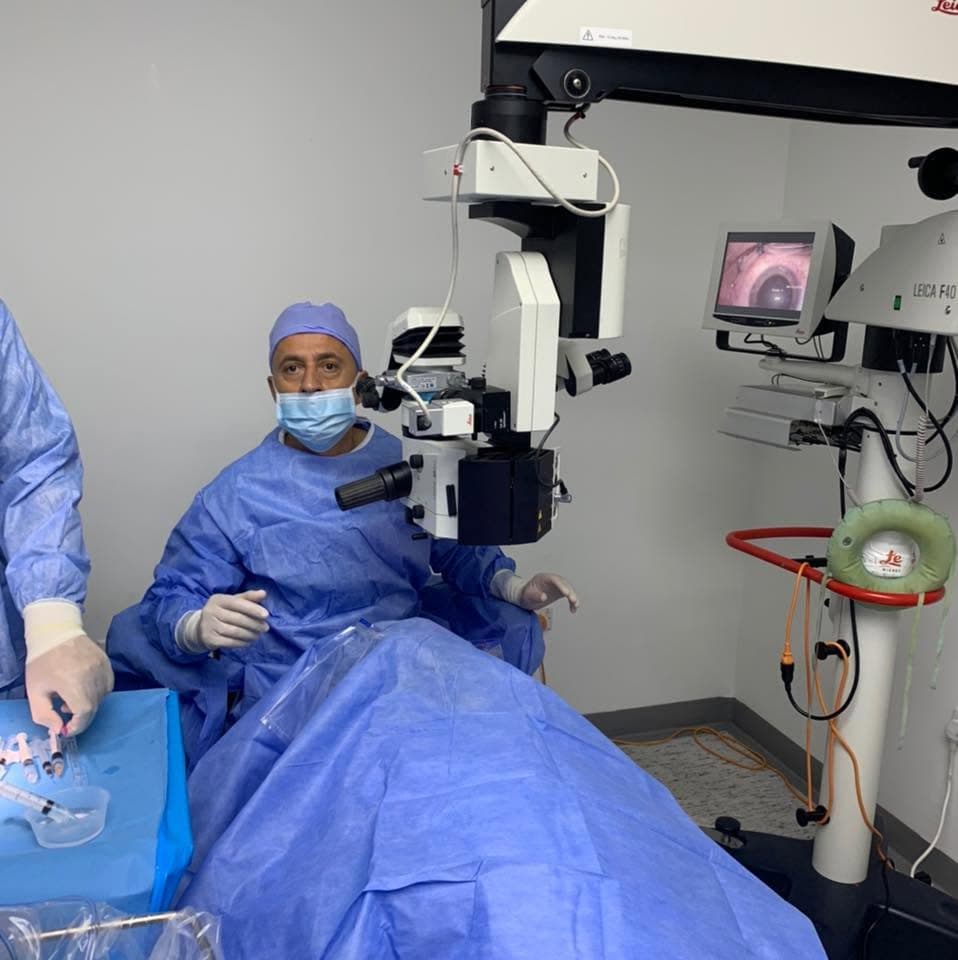
Dr Amer Fakhoury is a consultant in ophthalmology and eye surgery in Aqaba. His official profile lists the Jordanian Board and previous work at King Hussein Med…
Which doctors are listed for Red Eye Treatment in Jordan?
There are currently 1 doctor profiles linked to Red Eye Treatment on ClinicsJo. Review the listed services and contact the practice to confirm availability with the doctor and branch you choose.
How can I find an appointment for Red Eye Treatment?
Start with an available doctor's profile and use the contact or booking options shown there. Confirm the service, practice location and appointment time with the clinic. If this list is empty, broaden your search using the directory links on this page.
What does Red Eye Treatment cost in Jordan?
Ask the practice for the current price and what it includes. A consultation fee shown on a profile is not necessarily the price of a procedure, tests or follow-up. Confirm any additional charges and insurance arrangements before your visit.