Sign in to the platform to view the phone number
54 doctorsHours 10:00–17:00 · 6 days a weekInsurance not specified
Trusted medical platform in Jordan

This page lists eight risk assessment for cardio-disease prevention clinics in Jordan. All eight are in Amman, and every one publishes this service on ClinicsJo. They are ordered by how complete and checkable each profile is, not by clinical quality. You can compare locations, confirmed hours, linked doctors and listed insurers, then read practical guidance on preparing for a heart-risk check.
| # | Clinic | Area | Rating | Doctors | Hours | Insurance | Suits | Profile score |
|---|---|---|---|---|---|---|---|---|
| 1 | Abdali Hospital Outpatient Clinics | Abdali | — | 54 | 6 days · 10:00–17:00 | — | Heart-risk checks alongside diabetes, kidney or other internal medicine follow-up | 49/100 |
| 2 | Ibn Al-Haytham Hospital Outpatient Clinics | Tla' Al Ali | — | 23 | 6 days · 10:00–17:00 | — | Combined blood pressure, cholesterol and diabetes risk follow-up in west Amman | 49/100 |
| 3 | JoSante Healthcare Center — Amman Branch | 7th Circle | — | 8 | 7 days · 08:00–19:00 | — | People needing early, late or Friday access with on-site laboratory testing | 49/100 |
| 4 | Dr. Yazan Al Kilani Cardiology Clinic | Arjan | — | 1 | 6 days · 10:00–16:00 | Accepted | Prevention checks with in-clinic ECG, echo and stress testing | 46/100 |
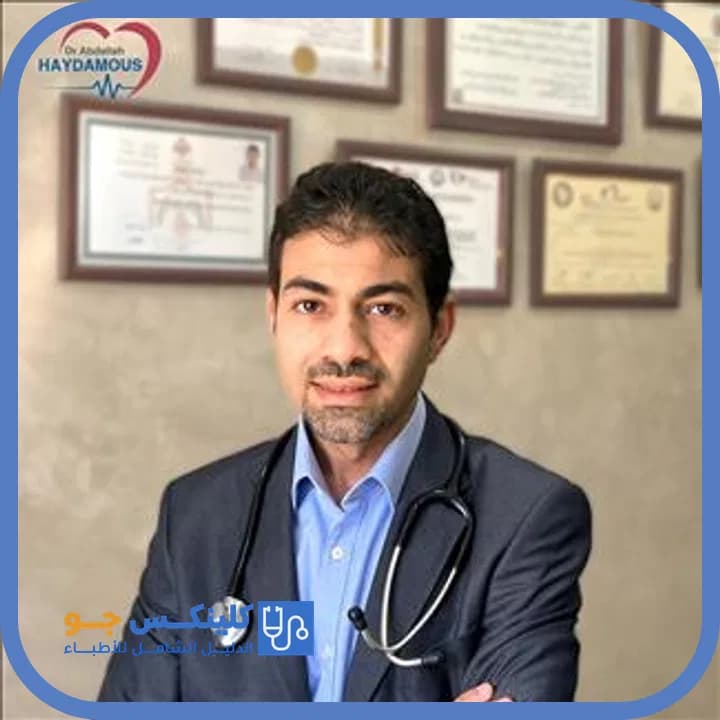
| 5 | Dr. Abdallah Haydamous Cardiology Clinic | Mecca Street | — | 1 | 6 days · 10:00–18:00 | Accepted | Blood pressure and heart-risk follow-up with weekday appointments until 18:00 | 46/100 |
| 6 | Dr. Malek Mohammed Khalil Al Jemzawi Clinic | Gardens | — | 1 | 6 days · 10:00–17:00 | Accepted | Cholesterol and blood pressure risk work-up with Holter and stress testing | 46/100 |
| 7 | Dr. Ammar Ali Al Awaisheh Clinic | Marj Al-Hamam | — | 1 | 6 days · 13:30–17:00 | Accepted | Residents of south-west Amman wanting afternoon heart-risk appointments | 46/100 |
| 8 | Dr. Basil Abu-El-Haija Cardiology and Heart Rhythm Clinic | Shmeisani | — | 1 | 6 days · 09:00–17:00 | Accepted | Heart-risk assessment when palpitations or irregular heartbeat are also a concern | 46/100 |
From each profile as published today: approved reviews only, consultation fees only where the profile states them, confirmed weekly hours (the most common shift). «—» means the profile does not publish it.
Abdali Hospital Outpatient Clinics, on Al-Istithmar Street in Abdali, Amman, bring internal medicine, cardiology, endocrinology and diabetes, nephrology, gastroenterology and oncology together in one outpatient service. Published services relevant to prevention include health risk assessment, preventive care consultation, cardiology consultation, coronary artery disease assessment and echocardiography. Linked cardiologists include Basel Al Aloul and Fadi Thabit Al-Qaisi, alongside endocrinologist Fares Haddad and two nephrologists. This mix may be useful when diabetes or kidney concerns sit alongside heart risk. The call centre books by physician and consultation type. Confirmed hours are 10:00–17:00, Saturday to Thursday. Outpatient appointments are separate from the hospital's emergency services.
Suits: Heart-risk checks alongside diabetes, kidney or other internal medicine follow-up
Ibn Al-Haytham Hospital Outpatient Clinics are on Al-Madina Al-Monawara Street in Tla' Al Ali, Amman. Published services include cardiovascular risk assessment, blood pressure and risk factor follow-up, lipid disorder follow-up, diabetes and blood pressure follow-up, and chest pain and palpitation assessment. The linked team includes cardiologist Asem Nammas, endocrinologist Nidal Al Khatib and internal medicine physicians Bandar Jamaldien Ghazal and Mazen Asayreh. You book by physician name and clinic extension, and the floor and session are confirmed at booking. Procedures that need specialist equipment are coordinated with the relevant department. Confirmed hours are 10:00–17:00, Saturday to Thursday.
Suits: Combined blood pressure, cholesterol and diabetes risk follow-up in west Amman
JoSante Healthcare Center's Amman branch is on the ground floor of Amman Gate Complex near the Seventh Circle. Its published services include medical consultations, laboratory testing and diagnostic care. Linked doctors include cardiologist Amer Al Sawaeer, endocrinologist Bassam Mohammad Taher and internal medicine physician Nisreen Wajdi Al Salaita, among eight doctors across several specialties. Confirmed hours are 08:00–19:00 Saturday to Thursday and 09:00–17:00 on Friday. These are reception hours, and the centre notes that not every specialist is present all day. Ask reception to confirm the cardiologist's attendance before you go.
Suits: People needing early, late or Friday access with on-site laboratory testing
Dr. Yazan Al Kilani Cardiology Clinic is on the third floor of Royal Hospital's east outpatient building on Al Urdon Street, Arjan, Amman. The clinic is run by cardiologist Yazan Moawia Al Kilani. Published services include risk assessment for cardio-disease prevention, preoperative cardiac risk assessment, electrocardiography, echocardiography, exercise stress testing and hypertension follow-up. The clinic also lists diagnostic catheterization, angioplasty and stenting, and post-stent follow-up. Interventional procedures are arranged according to clinical need. Arab Orient Insurance is listed. Confirmed hours are 10:00–16:00, Saturday to Thursday.
Suits: Prevention checks with in-clinic ECG, echo and stress testing
Dr. Abdallah Haydamous Cardiology Clinic sees patients at ELITE Medical Care in Crimson Plaza on Mecca Street, Amman, on the first floor near Kilo Circle. Cardiologist Abdallah Walid Haydamous runs the practice. Published services include cardiovascular risk assessment, risk assessment for cardio-disease prevention, electrocardiography, echocardiography, hypertension follow-up and chronic cardiac follow-up. The clinic also lists diagnostic catheterization and radial-access catheterization, which are coordinated when clinically required. Arab Orient Insurance is listed. Confirmed hours are 10:00–18:00, Saturday to Thursday, the latest weekday closing among the single-doctor clinics here.
Suits: Blood pressure and heart-risk follow-up with weekday appointments until 18:00
Dr. Malek Mohammed Khalil Al Jemzawi Clinic is in Clinic 101 on the first floor of Compu Jordan Complex, near Gardens Hospital in Gardens, Amman. The practice covers cardiology and internal medicine. Published services include a cardiovascular screening test, cardiovascular risk assessment, lipid disorder management and high cholesterol treatment, hypertension follow-up, and medication review. Listed investigations are ECG, echocardiography, exercise stress testing and Holter rhythm monitoring. Catheter-based care is coordinated when indicated. Arab Orient Insurance is listed. Confirmed hours are 10:00–17:00 Saturday to Wednesday and 10:00–15:00 on Thursday.
Suits: Cholesterol and blood pressure risk work-up with Holter and stress testing
Dr. Ammar Ali Al Awaisheh Clinic is on the third floor of Istitieh Complex 51 near Al Bakri Circle in Marj Al-Hamam, Amman. Cardiologist Ammar Ali Al Awaisheh runs the clinic. Published services include risk assessment for cardio-disease prevention, cholesterol and hypertension follow-up, echocardiography, rapid-heart-rate assessment and preoperative cardiac assessment. Visits can also include deciding whether diagnostic or interventional catheterization is needed, and coronary interventions are coordinated with an appropriate facility. Arab Orient Insurance is listed. Confirmed hours are afternoons only, 13:30–17:00, Saturday to Thursday.
Suits: Residents of south-west Amman wanting afternoon heart-risk appointments
Dr. Basil Abu-El-Haija Cardiology and Heart Rhythm Clinic is in Clinic 3 on the first floor of Hammouri Clinics Complex, behind Specialty Hospital in Shmeisani, Amman. The clinic combines general cardiology with cardiac electrophysiology. Published services include heart-health and cardiovascular risk assessment, a cardiovascular screening test, palpitation and arrhythmia assessment, and atrial fibrillation treatment. Device and ablation procedures such as pacemaker implantation and catheter ablation are also listed. The requirements and location of an invasive procedure are discussed separately from the consultation. Arab Orient Insurance is listed. Confirmed hours are 09:00–17:00, Saturday to Thursday.
Suits: Heart-risk assessment when palpitations or irregular heartbeat are also a concern
Every matching clinic profile in this country was scored out of 100 for how complete and checkable its published information is, and the highest scores appear here in order. Featured placement does not change a profile's score, and the score does not measure treatment quality or outcomes — it tells you how much you can check before you call.
Ties are broken by the number of approved reviews, then published years of experience. Confirm the service, branch, appointment, fees and insurance coverage with the practice before visiting.
A cardiovascular risk assessment estimates your chance of having a heart attack or stroke over the coming years, usually the next ten. It does not diagnose disease. Instead, it combines known risk factors to guide prevention. Doctors commonly look at:
Many doctors use validated risk charts or calculators, such as those published by the WHO, to turn these factors into an estimated risk. Lifestyle advice and any treatment decisions are then based on that estimate.
Mainstream guidance suggests regular checks from around age 40. Earlier assessment is reasonable if you have any of the following:
A prevention visit is for people who feel well. It is not the right place for active symptoms. Call 911 immediately if you or someone with you has:
Do not drive yourself or wait for a clinic appointment in these situations.
All eight clinics publish this service, so the practical differences lie in setup, location and hours.
The ranking reflects profile completeness only. Use it to see who publishes the most checkable information, not as a measure of skill.
A typical risk-assessment consultation includes:
The doctor may then explain your estimated risk and discuss lifestyle changes. Any further tests or treatment depend on your individual results.
Preparation:
What to bring:
Questions worth asking:
None of these profiles publishes a consultation fee, so ask the clinic directly. Five profiles list Arab Orient Insurance, but a listing alone does not confirm that your specific policy covers preventive visits. Before you book, ask:
At the multi-specialty centres, booking is arranged by physician name and consultation type. Confirm that you are booked with the cardiologist or internal medicine doctor who handles risk assessment, and check the floor and clinic number.
All eight clinics on this kingdom-wide list are in Amman. Their districts, as stated on each profile, are:
Visitors from other governorates should allow extra time for Amman traffic, especially at midday and in the late afternoon. Use the map location on each profile, and ask the clinic for the building, floor and clinic number. Several practices sit inside larger complexes, so this saves time. If you have a blood test booked, plan your journey so you arrive on time without rushing, which can raise blood pressure readings.
No clinic on ClinicsJo has published a price for Risk assessment for cardio-disease prevention yet, so we do not quote an estimated figure. What is published is the consultation fee: 20–40 JOD (profiles: 5). The doctor sets the treatment price after assessing your case.
Before booking, ask the clinic for the all-inclusive price and what it covers, any extra tests or scans, how many follow-up visits are included, the payment options, and whether your insurance is accepted. You can reach them through the contact details on the doctor and clinic profiles on this page.
The figures above were published by the clinics and doctors themselves on ClinicsJo and may change. We do not estimate prices. Confirm the all-inclusive price with the clinic before booking. Offers on ClinicsJo
Prepared by: the ClinicsJo editorial team. Last updated 18 October 2026.
List data: the doctor and clinic profiles published on ClinicsJo — services, doctors, hours, insurers and addresses entered by the providers or compiled by our team from public sources. Reviews appear only after moderation, the verified badge only on profiles the platform administration verified, and no price appears unless the profile itself publishes it. Where the data comes from and how lists are ordered · Medical content policy
Health references: the health information in the guide is general and written to agree with the guidance of major health bodies. To read further or check it:
The full directory behind this list, and our other shortlists for the same topic and place.
This page helps you compare published profiles; it is not medical advice and does not rank clinical skill. In an emergency call 911 or go to the nearest emergency department.