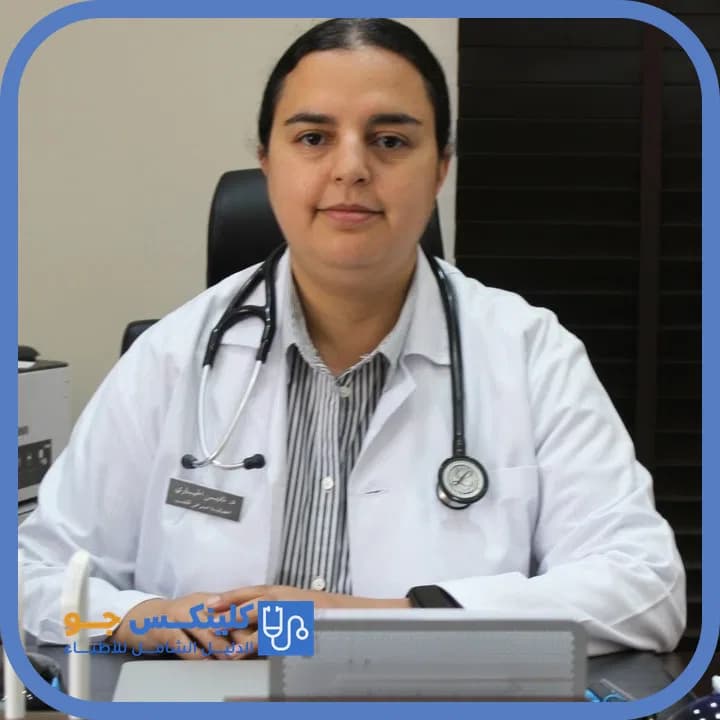
Abdali Hospital Outpatient Clinics
Sign in to the platform to view the phone number
115 viewsHours 10:00–17:00 · 6 days a weekInsurance not specified
Trusted medical platform in Jordan

If you searched for the best risk assessment for cardio-disease prevention doctors in Jordan, this page lists seven doctors whose profiles publish this service. Six are cardiologists and one is an internal medicine consultant. The order reflects how complete each published profile is, not clinical quality. You can compare their training, services, clinic areas in Amman, opening hours and listed insurers, then contact the clinic that suits you.
| # | Doctor | Area | Rating | Experience | Consultation | Hours | Insurance | Suits | Profile score |
|---|---|---|---|---|---|---|---|---|---|
| 1 | Basel Al Aloul | Abdali | — | — | — | 6 days · 10:00–17:00 | Accepted | Risk review with access to stress testing and cardiac imaging | 47/100 |
| 2 | Bandar Jamaldien Ghazal | Tla' Al Ali | — | — | — | 6 days · 10:00–17:00 | Accepted | People managing diabetes, blood pressure or cholesterol together | 47/100 |
| 3 | Nadine Mohammad Aktham Hiari | Jabal Amman | — | — | — | 6 days · 10:00–17:00 | Accepted | Adults wanting risk review alongside chest pain assessment in Jabal Amman | 47/100 |
| 4 | Fadi Thabit Al-Qaisi | Abdali | — | — | 40 JOD | 6 days · 10:00–17:00 | Accepted | Risk review with blood pressure, cholesterol and rhythm monitoring | 47/100 |
| 5 | Mahmoud Youssef Al-Hazaimeh | Khalda | — | — | 20 JOD | 6 days · 10:00–17:00 | Accepted | West Amman residents wanting testing plus risk-factor and medication review | 45/100 |
| 6 | Yazan Moawia Al Kilani | Arjan | — | — | 25 JOD | 6 days · 10:00–16:00 | Accepted | People whose main concern is high blood pressure | 45/100 |
| 7 | Abdallah Walid Haydamous | Mecca Street | — | — | 20 JOD | 6 days · 10:00–18:00 | Accepted | Ongoing hypertension or cardiac follow-up, with evening hours until 18:00 | 45/100 |
From each profile as published today: approved reviews only, consultation fees only where the profile states them, confirmed weekly hours (the most common shift). «—» means the profile does not publish it.
Dr. Basel Al Aloul is a consultant interventional cardiologist at Abdali Hospital Outpatient Clinics in Abdali, Amman. He studied medicine at the Royal College of Surgeons in Ireland. He completed an internal medicine residency and fellowships in cardiology and interventional cardiology at the University of Minnesota. His published services include cardiovascular risk assessment, coronary artery disease assessment, echocardiography, cardiac stress testing, cardiac CT imaging and heart failure follow-up, with catheterisation when clinically indicated. The clinic's confirmed hours are Saturday to Thursday, 10:00–17:00. Listed insurers include GlobeMed, MedNet, NatHealth, Arab Orient Insurance and Euro Arab Insurance Group, among others.
Suits: Risk review with access to stress testing and cardiac imaging
Dr. Bandar Jamaldien Ghazal is an internal medicine consultant. His biography also describes him as a cardiology specialist. He sees patients in room 107 on the first floor of Ibn Al-Haytham Hospital Outpatient Clinics in Tla' Al Ali, Amman. He earned his Bachelor of Medicine and Surgery from Liaquat University of Medical and Health Sciences in 2004 and a master's degree in internal medicine from the University of Jordan in 2010. His services combine cardiovascular risk assessment with diabetes and hypertension follow-up, lipid disorder follow-up, palpitation and chest pain assessment, and medication review. Confirmed hours are Saturday to Thursday, 10:00–17:00.
Suits: People managing diabetes, blood pressure or cholesterol together
Dr. Nadine Mohammad Aktham Hiari is a cardiology and interventional cardiology specialist. Her clinic is on Ibn Khaldoun Street in Jabal Amman. She holds a Bachelor of Medicine and Surgery from the University of Cambridge, MRCP (UK), the Jordanian Board in Cardiology from the Jordan Medical Council, and the European Exam in General Cardiology. Her practice sees adults for symptom and risk assessment, chest pain assessment, and treatment review after cardiac interventions. Confirmed hours are Saturday to Wednesday, 10:00–17:00, and Thursday, 10:00–13:00. She lists twelve insurers, including GlobeMed, MedGulf, JOFICO, Royal Care and Arab Orient Insurance.
Suits: Adults wanting risk review alongside chest pain assessment in Jabal Amman
Dr. Fadi Thabit Al-Qaisi is a cardiology and interventional cardiology consultant. He sees patients on the seventh floor of Abdali Hospital Outpatient Clinics in Abdali, Amman. He completed an internal medicine residency and fellowships in cardiology and interventional cardiology at Henry Ford Hospital in the USA. He holds American Board certifications in internal medicine, cardiology and interventional cardiology. His published services include ECG, echocardiography, Holter monitoring, exercise stress testing, hypertension treatment review, and cholesterol and lipid review, alongside catheter-based procedures. Confirmed hours are Saturday to Thursday, 10:00–17:00. Listed insurers include GlobeMed, MedNet, NatHealth, OmniCare and Newton Insurance.
Suits: Risk review with blood pressure, cholesterol and rhythm monitoring
Dr. Mahmoud Youssef Al-Hazaimeh is a cardiovascular consultant with a sub-specialty listing in vascular disease. His clinic is in Khalda, Amman. He earned his medical degree at the University of Milan in 1972. His biography describes a practice that combines clinical review with ECG, echocardiography and exercise testing, followed by review of risk factors and medication. Published services also include cholesterol and lipid review and medication follow-up for heart disease. Confirmed hours are Saturday to Thursday, 10:00–17:00. He lists twelve insurers, among them National Insurance, Delta Insurance Company, MedVisa, Medexa and GlobeMed.
Suits: West Amman residents wanting testing plus risk-factor and medication review
Dr. Yazan Moawia Al Kilani is a cardiologist with a private outpatient clinic in Arjan, Amman. He studied medicine at Jordan University of Science and Technology. He holds German specialist (Facharzt) certifications in internal medicine (Münster, 2017) and cardiology (Hannover, 2020), plus a Hypertensiology qualification from the German Hypertension Society (2019). His services include hypertension follow-up and treatment, echocardiography, ECG, exercise stress testing, preoperative cardiac risk assessment and cardiac rhythm follow-up, as well as catheterisation and stenting. Confirmed hours are Saturday to Thursday, 10:00–16:00. His listed insurer is Arab Orient Insurance.
Suits: People whose main concern is high blood pressure
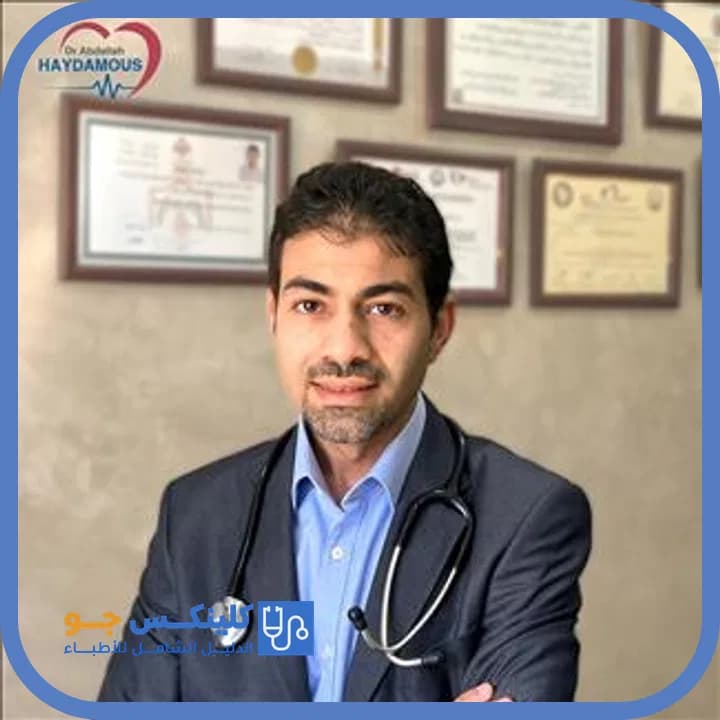
Dr. Abdallah Walid Haydamous is a cardiology and interventional catheterisation specialist on Mecca Street, Amman. He holds the Arab Board in Cardiology and the Jordanian Board in Internal Medicine, and earned his medical degree at Al-Baath University in Syria. He trained in internal medicine at the Islamic Hospital and completed a cardiology fellowship at Jordan University Hospital. His biography covers hypertension, atherosclerosis, rhythm disorders, valve disease and heart muscle conditions. Published services include cardiovascular risk assessment, ECG, echocardiography and chronic cardiac follow-up. Confirmed hours are Saturday to Thursday, 10:00–18:00, the latest closing time on this list. His listed insurer is Arab Orient Insurance.
Suits: Ongoing hypertension or cardiac follow-up, with evening hours until 18:00
Every matching doctor profile in this country was scored out of 100 for how complete and checkable its published information is, and the highest scores appear here in order. Featured placement does not change a profile's score, and the score does not measure treatment quality or outcomes — it tells you how much you can check before you call.
Ties are broken by the number of approved reviews, then published years of experience. Confirm the service, branch, appointment, fees and insurance coverage with the practice before visiting.
A cardiovascular risk assessment estimates how likely you are to have a heart attack or stroke over the coming years. It also identifies which risk factors you can change. It is a preventive check, not a test for a disease you already have. Doctors usually combine your age and sex, blood pressure, blood cholesterol, blood sugar or diabetes status, smoking, weight and waist size, physical activity and family history. Many use a validated risk chart or calculator, such as the WHO cardiovascular risk charts, to turn these into an overall estimate. They then talk through lifestyle changes and, where guidelines support it, treatment options.
Major health bodies recommend regular checks from middle age onward, and earlier for people with extra risk. Consider booking an assessment if you:
A risk assessment is not the right route for symptoms happening now. Call 911 immediately for:
Do not drive yourself to hospital if you have these symptoms.
All seven profiles publish risk assessment for cardio-disease prevention. They differ in specialty, focus and practical details. Useful questions to weigh:
The ranking reflects how much each profile publishes. It does not tell you who is the right doctor for you.
A first visit for cardiovascular risk assessment usually includes a detailed history, a physical examination, and measurement of blood pressure, weight and often waist size. The doctor will review recent blood tests or request new ones, commonly a lipid profile and blood sugar or HbA1c. An ECG may be done. Further tests depend on your history and are not routine for everyone.
Each profile lists the insurers the clinic works with. Insurer networks and policy terms change, so confirm the details directly with the clinic and your insurer. Ask:
When booking, mention that you want a preventive risk assessment so the clinic can allow enough time. Ask whether you should arrive fasting.
This is a Kingdom-wide list, and each profile states its own city and district. At present, all seven listed doctors give clinic addresses in Amman, in areas including Abdali, Tla' Al Ali, Jabal Amman, Khalda, Arjan and Mecca Street. Two of the doctors are based in the same outpatient clinics in Abdali.
Use the map location on each profile to plan your route. Ask the clinic about parking, the building entrance and the floor or room number. Allow extra time at busy hours, especially if you need to arrive fasting for blood tests. If you are visiting Jordan, check opening hours against your travel plans. Most clinics listed here open Saturday to Thursday.
No clinic on ClinicsJo has published a price for Risk assessment for cardio-disease prevention yet, so we do not quote an estimated figure. What is published is the consultation fee: 20–40 JOD (profiles: 5). The doctor sets the treatment price after assessing your case.
Before booking, ask the clinic for the all-inclusive price and what it covers, any extra tests or scans, how many follow-up visits are included, the payment options, and whether your insurance is accepted. You can reach them through the contact details on the doctor and clinic profiles on this page.
The figures above were published by the clinics and doctors themselves on ClinicsJo and may change. We do not estimate prices. Confirm the all-inclusive price with the clinic before booking. Offers on ClinicsJo
Prepared by: the ClinicsJo editorial team. Last updated 18 October 2026.
List data: the doctor and clinic profiles published on ClinicsJo — services, doctors, hours, insurers and addresses entered by the providers or compiled by our team from public sources. Reviews appear only after moderation, the verified badge only on profiles the platform administration verified, and no price appears unless the profile itself publishes it. Where the data comes from and how lists are ordered · Medical content policy
Health references: the health information in the guide is general and written to agree with the guidance of major health bodies. To read further or check it:
The full directory behind this list, and our other shortlists for the same topic and place.
This page helps you compare published profiles; it is not medical advice and does not rank clinical skill. In an emergency call 911 or go to the nearest emergency department.