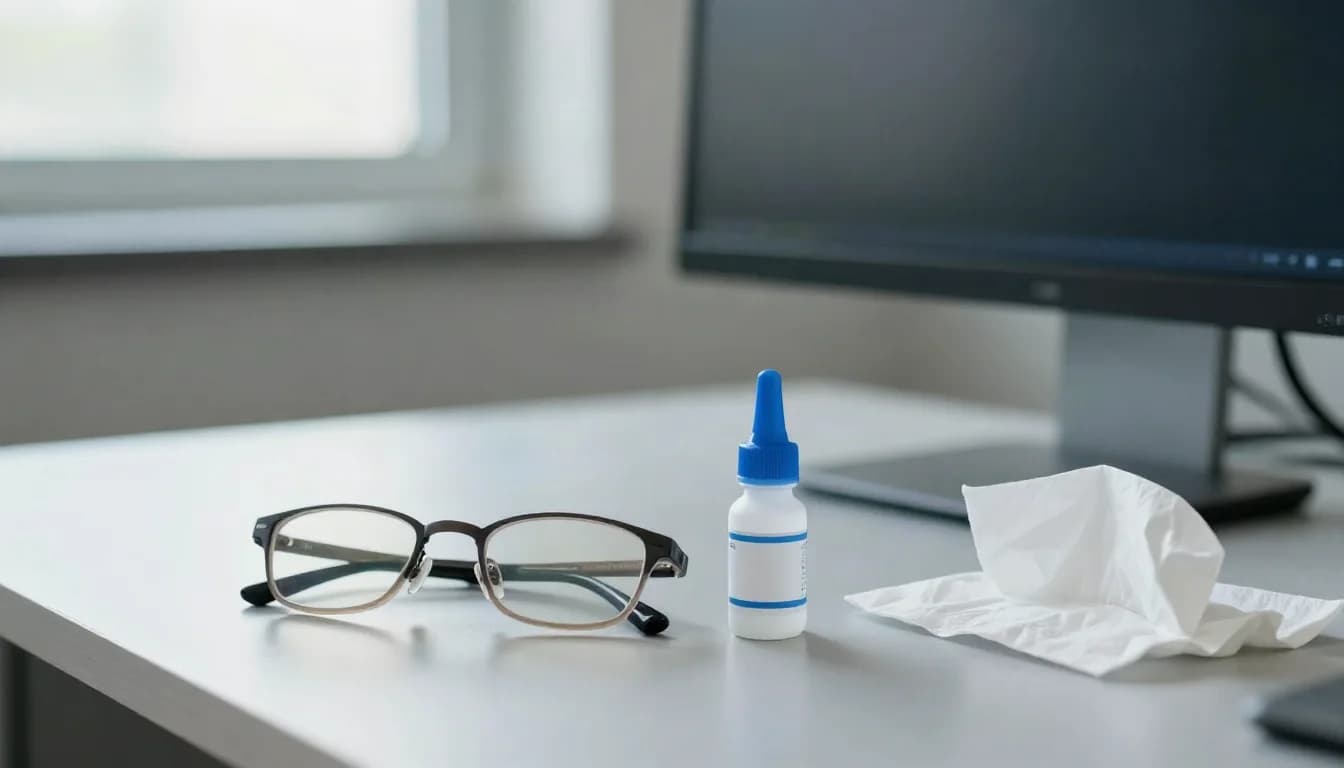
Dry eye disease is a chronic disorder of the ocular surface caused either by reduced tear production or by tears evaporating too quickly because the oil glands of the lid margin are not working properly. The tear film loses stability and the surface becomes irritated and inflamed. The problem is therefore not simply a shortage of water, but a disturbance in tear quality and distribution as well.
The symptoms are not always a feeling of dryness. Patients describe burning, stinging, grittiness, heavy lids towards the end of the day, fluctuating blurred vision that clears when they blink, intolerance of contact lenses, and paradoxically watery eyes. Many people are surprised that a watering eye can be a dry eye, but reflex watery tears do not replace a disordered tear film. In Jordan's climate, dust, dry air, air conditioning, and heating make things worse, and blink rate falls to less than half its normal value during screen work.
Contributing factors include ageing and post-menopausal changes, lid-margin inflammation and recurrent styes, immune conditions such as Sjogren's disease and rheumatoid arthritis, thyroid disorders, and many medications including antihistamines, antidepressants, certain blood-pressure drugs, oral contraceptives, and vitamin A derivatives. Refractive laser surgery also causes dryness that is usually temporary. Identifying the driver determines the treatment, and whether any option suits you is decided by clinical examination rather than by trial and error.
Treatment is stepwise: preservative-free artificial tears when drops are needed frequently, nightly warm compresses and lid hygiene for oil-gland dysfunction, changes to the working environment with conscious blinking and regular visual breaks, then prescribed anti-inflammatory drops when needed, punctal plugs to conserve tears, and in-clinic lid and gland treatments for stubborn cases.
The limits must be stated plainly. In most patients dry eye is a condition that is controlled rather than cured, and the goal is stable control, not a permanent end to it. Artificial tears relieve symptoms but do not by themselves correct oil-gland disease, whitening drops are not a treatment and make matters worse, meaningful improvement takes weeks of consistency rather than days, and symptoms usually return if treatment simply stops.
1 specialists
Procedure steps
1
Symptom assessment, medication and environment review
The pattern, timing, and severity of symptoms are recorded using structured questions, and the doctor reviews all medications and supplements, screen hours, the nature of the workplace with its air conditioning and dust, contact-lens wear, and any immune or thyroid disease or previous eye surgery.
2
Examination of the lids and oil glands
The lid margin and lashes are examined at the slit lamp, gland openings and the quality of their secretion are assessed with gentle expression, and the doctor looks for lid-margin inflammation, lash mites, or lid laxity that prevents complete closure during sleep.
3
Ocular surface tests
Tear film break-up time is measured, the height of the tear meniscus is assessed, and surface dyes are used to show where the cornea and conjunctiva are damaged. A tear volume test may be added when reduced production or an immune disease is suspected.
4
A stepwise treatment plan
The plan starts with lubricants matched to the type of dryness, a lid-hygiene routine, and environmental changes. Prescribed anti-inflammatory drops, punctal plugs, or in-clinic gland treatments are added when needed, and associated causes such as allergy and blepharitis are treated in parallel.
5
Follow-up and measuring response
A review is usually set 4 to 8 weeks later to compare symptoms and findings, and treatment is stepped up or down according to response. Cases that do not respond are reassessed for an immune or drug-related cause or a problem with lid closure.
Before the procedure
Come to your appointment with a written list of all your medications and supplements, since many common drugs cause dryness, and do not stop any medication on your own. Tell the doctor when symptoms are worst during the day, how many hours you spend on screens, whether you sleep facing an air conditioner or heater, and whether you wear contact lenses and for how long each day. Bring every drop and lubricant you have tried in its original box, because the preservative matters, and mention any previous eye surgery including laser vision correction. Avoid eye make-up and false lashes on the day of the examination, and do not use whitening drops beforehand because they alter the appearance of the surface. If you wear contact lenses, ask in advance how long to leave them out, and report any dry mouth or joint pain, as these may point to an immune cause.
After the procedure
Use your lubricant on a regular schedule rather than only when you feel dry, and if you need it more than four times a day ask about a preservative-free option. Apply a warm compress to the closed lids for a few minutes and then gently clean the lid margin every day, and keep this routine even after you improve, because stopping brings symptoms back. Position screens below eye level, blink consciously, take a visual break every twenty minutes, keep air-conditioning and heater airflow away from your face, and wear sunglasses in dust and wind. Do not rub your eyes or use whitening drops, and reduce contact-lens hours or change the lens type on your doctor's advice. **Seek care promptly if you develop severe eye pain, vision loss that does not clear with blinking, marked light sensitivity, purulent discharge, a white spot on the cornea, or sudden deterioration, because these suggest corneal erosion or infection rather than simple dryness.**
Expected duration
The diagnostic visit usually takes 20 to 40 minutes, and noticeable improvement typically appears after 4 to 12 weeks of consistent treatment.
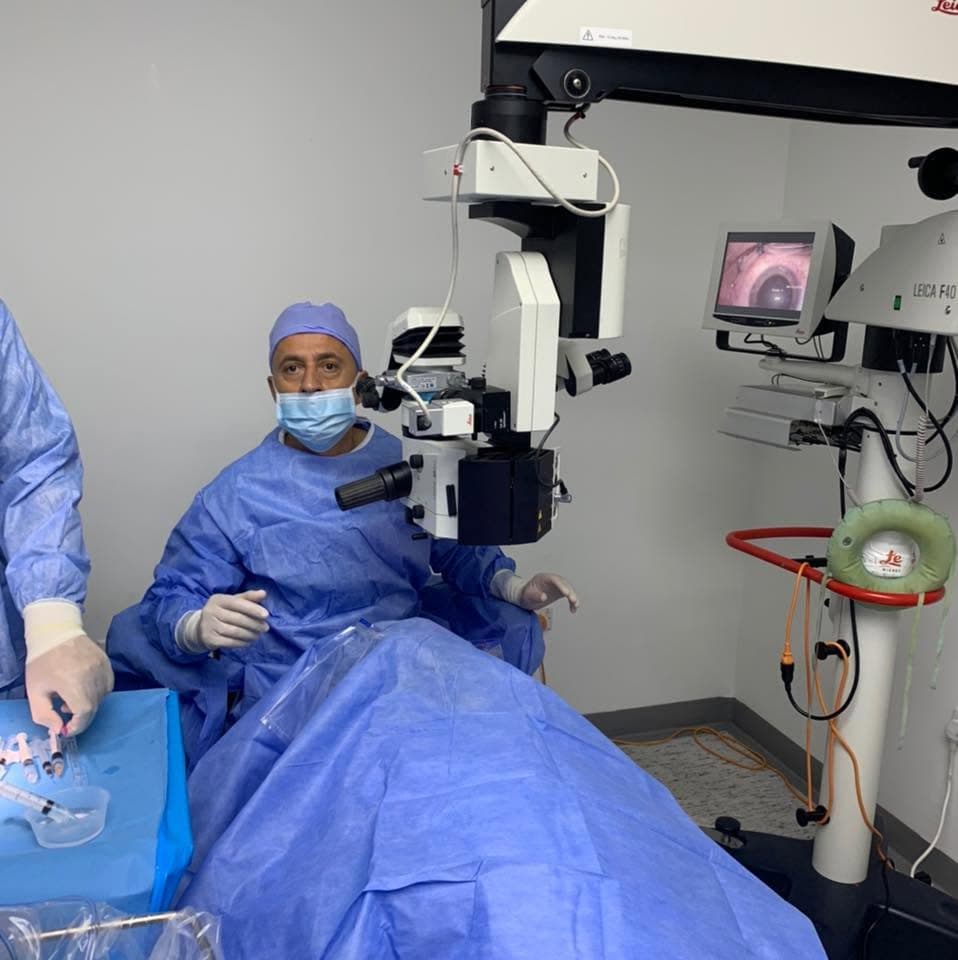
Dr Amer Fakhoury is a consultant in ophthalmology and eye surgery in Aqaba. His official profile lists the Jordanian Board and previous work at King Hussein Med…
Which doctors are listed for Treatment for dry eyes in Jordan?
There are currently 1 doctor profiles linked to Treatment for dry eyes on ClinicsJo. Review the listed services and contact the practice to confirm availability with the doctor and branch you choose.
How can I find an appointment for Treatment for dry eyes?
Start with an available doctor's profile and use the contact or booking options shown there. Confirm the service, practice location and appointment time with the clinic. If this list is empty, broaden your search using the directory links on this page.
What does Treatment for dry eyes cost in Jordan?
Ask the practice for the current price and what it includes. A consultation fee shown on a profile is not necessarily the price of a procedure, tests or follow-up. Confirm any additional charges and insurance arrangements before your visit.