Abdali Hospital Outpatient Clinics
Sign in to the platform to view the phone number
203 viewsHours 10:00–17:00 · 6 days a weekInsurance not specified
Trusted medical platform in Jordan

If you are searching for the best transradial cardiac catheterization doctors in Jordan, this page lists four Amman cardiologists who each publish wrist-access (radial) catheterization among their services. They are ordered by how complete and checkable their profiles are, not by clinical skill. You can compare their training, services, insurers and clinic hours, then use the practical guidance below to prepare your questions before booking.
| # | Doctor | Area | Rating | Experience | Consultation | Hours | Insurance | Suits | Profile score |
|---|---|---|---|---|---|---|---|---|---|
| 1 | Fadi Thabit Al-Qaisi | Abdali | — | — | 40 JOD | 6 days · 10:00–17:00 | Accepted | Valve or TAVR assessment plus radial catheterization, Abdali, wide insurer list | 47/100 |
| 2 | Ghassan Mohammad Shawabkeh | Shmeisani | — | 15 yrs | 25 JOD | 6 days · 11:00–17:00 | Accepted | Complex coronary disease questions; Shmeisani clinic with 24-hour blood pressure monitoring | 45/100 |
| 3 | Abdallah Walid Haydamous | Mecca Street | — | — | 20 JOD | 6 days · 10:00–18:00 | Accepted | Mecca Street patients needing catheterization plus long-term hypertension follow-up | 45/100 |
| 4 | Raed Al Awaisheh | Shmeisani | — | — | 20 JOD | 6 days · 10:00–18:00 | Accepted | Hard-to-control blood pressure and anticoagulant review alongside radial catheterization, Shmeisani | 40/100 |
From each profile as published today: approved reviews only, consultation fees only where the profile states them, confirmed weekly hours (the most common shift). «—» means the profile does not publish it.
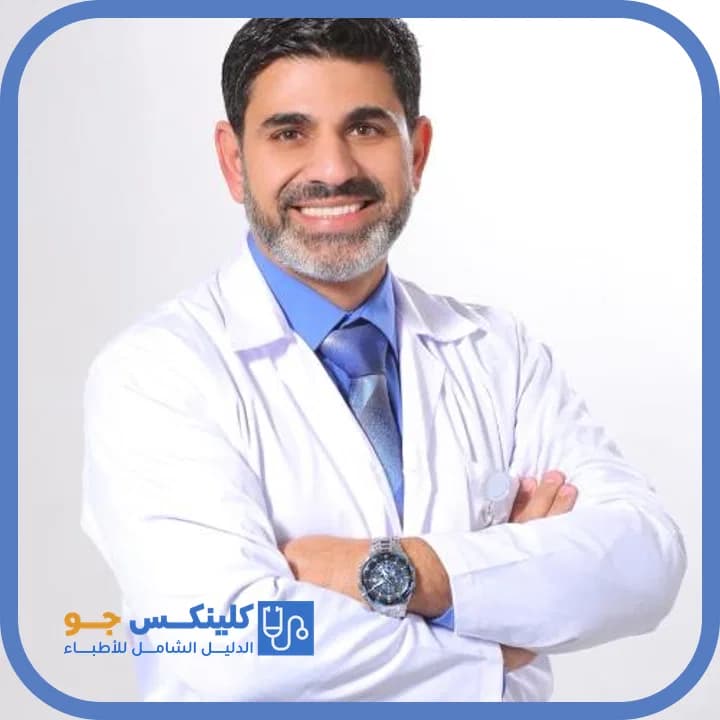
Dr. Fadi Thabit Al-Qaisi is a cardiology and interventional cardiology consultant. He completed an internal medicine residency and fellowships in cardiology and interventional cardiology at Henry Ford Hospital in the USA. He holds American Boards in Internal Medicine, Cardiology and Interventional Cardiology. He sees patients on the seventh floor of Abdali Hospital Outpatient Clinics in Abdali, Amman. His published services include transradial cardiac catheterization, diagnostic and interventional catheterization, coronary stenting, heart valve assessment and assessment for transcatheter aortic valve replacement. He also offers ECG, echocardiography, Holter monitoring and exercise stress testing. Listed insurers are GlobeMed, MedNet, Euro Arab Insurance Group, OmniCare, Newton Insurance, NatHealth and Med Service. Confirmed hours are Saturday to Thursday, 10:00–17:00.
Suits: Valve or TAVR assessment plus radial catheterization, Abdali, wide insurer list
Dr. Ghassan Mohammad Shawabkeh is a cardiology and interventional catheterization consultant. He graduated from Poznan University in Poland in 2001 and obtained the Jordanian Board in Internal Medicine in 2008. He also holds the Arab and Saudi Boards in Cardiology, a European fellowship and a European cardiac and vascular catheterization credential. His background includes training at a Riyadh university medical city and cardiology leadership at Riyadh Care Hospital. His biography highlights complex coronary interventions, including chronic occlusions, calcified arteries and left-main and branching lesions. Services at his Shmeisani clinic include radial-access catheterization, angioplasty and stenting, rhythm monitoring and 24-hour blood pressure monitoring. He lists Arab Orient Insurance. Hours are Saturday to Wednesday 11:00–17:00 and Thursday 11:00–15:00.
Suits: Complex coronary disease questions; Shmeisani clinic with 24-hour blood pressure monitoring
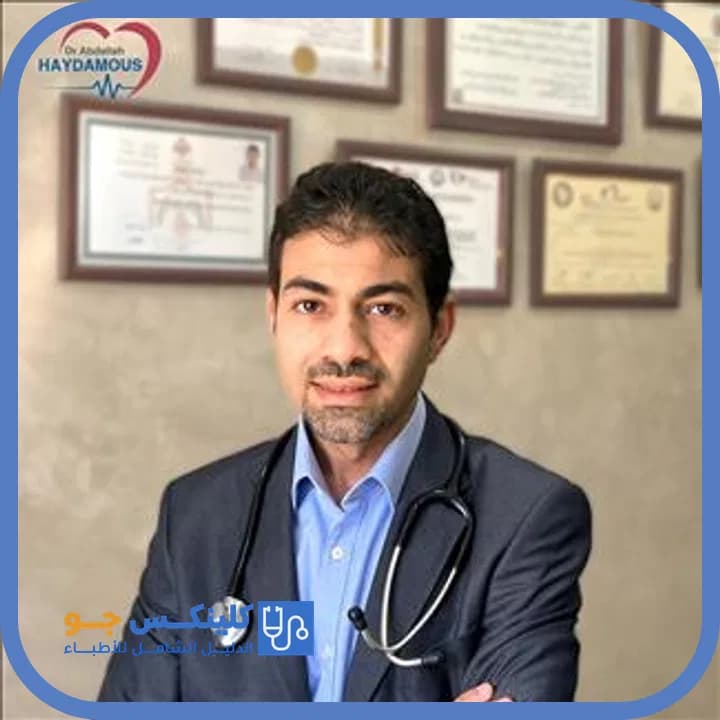
Dr. Abdallah Walid Haydamous is a cardiology and interventional catheterization specialist in Amman. He earned his medical degree at Al-Baath University in Syria, trained in internal medicine at the Islamic Hospital and completed a cardiology fellowship at Jordan University Hospital. He holds the Arab Board in Cardiology and the Jordanian Board in Internal Medicine. His biography mentions membership of the American College of Cardiology and the Jordanian cardiac society. He manages hypertension, atherosclerosis, rhythm disorders, valve disease and heart muscle conditions. His services include transradial and diagnostic catheterization, angioplasty and stenting. He sees patients at ELITE Medical Care in Crimson Plaza on Mecca Street. He lists Arab Orient Insurance, and his hours are Saturday to Thursday, 10:00–18:00.
Suits: Mecca Street patients needing catheterization plus long-term hypertension follow-up
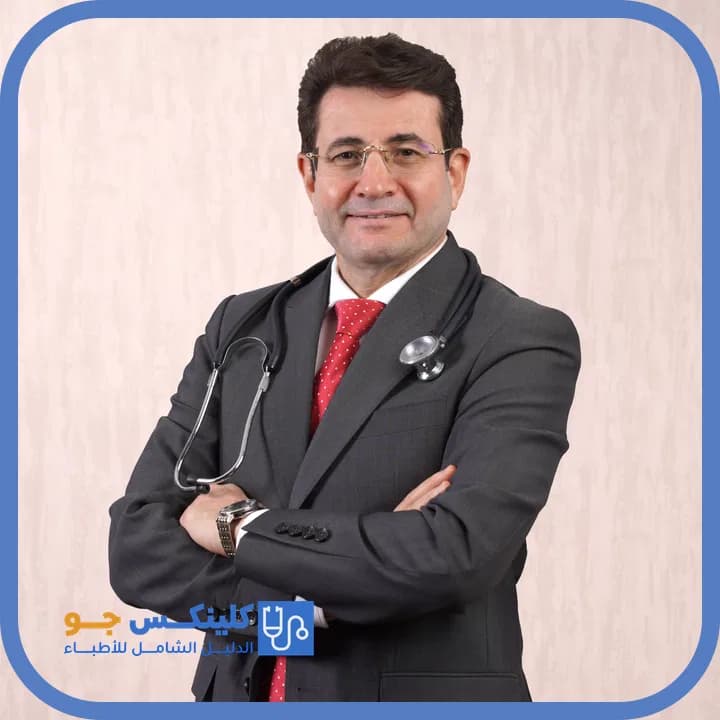
Dr. Raed Al Awaisheh is a cardiology and catheterization consultant at Al Ra'ed Heart Center in Shmeisani, Amman. He graduated in medicine and surgery from the University of Jordan and holds the Jordanian Board in Internal Medicine and the Arab Board in Cardiology. His scope covers diagnostic and therapeutic catheterization, angioplasty, stents, radial access and difficult-to-control hypertension. The centre offers ECG, echocardiography, exercise stress tests and 24- or 48-hour rhythm monitoring. It also provides team-based review of chronic and anticoagulant medication, and cardiac nutrition advice. According to his profile, test results feed into planning for intervention and follow-up. Confirmed hours are Saturday to Thursday, 10:00–18:00.
Suits: Hard-to-control blood pressure and anticoagulant review alongside radial catheterization, Shmeisani
Every matching doctor profile in this country was scored out of 100 for how complete and checkable its published information is, and the highest scores appear here in order. Featured placement does not change a profile's score, and the score does not measure treatment quality or outcomes — it tells you how much you can check before you call.
Ties are broken by the number of approved reviews, then published years of experience. Confirm the service, branch, appointment, fees and insurance coverage with the practice before visiting.
Transradial catheterization is not a different test. It is the standard heart catheterization done through the radial artery at the wrist instead of the femoral artery in the groin. Through this route, a cardiologist can take X-ray images of the coronary arteries (coronary angiography). If a significant narrowing is found and treatment is appropriate, the same session can include balloon dilatation and stent placement. Bleeding at the wrist is usually easier to control with a compression band, so many patients sit up and walk sooner than after groin access.
Catheterization is a decision your cardiologist makes after assessing you. Many people with heart symptoms first need simpler tests such as an ECG, an echocardiogram or a stress test. A cardiologist may consider catheterization in situations such as:
Book a cardiology visit if you notice breathlessness or chest discomfort on effort, new palpitations or reduced exercise tolerance. A visit also makes sense if you have several risk factors, such as diabetes, high blood pressure, high cholesterol, smoking or a family history of early heart disease.
Call 911 straight away, and do not drive yourself, if you or someone with you has:
After a wrist procedure, seek urgent help if bleeding does not stop with firm pressure, if swelling grows quickly, or if the hand becomes cold, pale, numb or very painful.
All four cardiologists publish radial-access catheterization among their services. That makes them a reasonable starting point for anyone looking for the best transradial cardiac catheterization doctors in Jordan, but the right choice depends on your situation.
Each profile describes a different emphasis:
These are published descriptions, not comparisons of outcomes.
The addresses on this page are consultation clinics. Catheterization takes place in a catheterization laboratory. Ask:
Wrist access is preferred in most cases, but it is not always possible. Small or tortuous arteries, poor hand circulation or the need for larger equipment can make groin access more suitable. Ask how the doctor decides, and what the backup plan is.
Compare insurers, opening hours and location. Follow-up visits after a stent are usually regular, so a clinic you can reach easily matters.
The first appointment is a consultation, not the procedure. The cardiologist will take your history and examine you. They may repeat an ECG or echocardiogram and decide whether catheterization is needed at all. If it is, they may check the circulation in your hand before choosing which wrist to use. This is the first stage of the procedure pathway.
Do not stop or change any medicine before a procedure unless your doctor tells you to.
The stages are:
A diagnostic study usually takes 20 to 45 minutes. With balloon dilatation and stenting it takes 45 to 90 minutes or more. The compression band is then gradually released over one to three hours. Going home the same day is possible after an uncomplicated diagnostic procedure. Arrange for someone to take you home.
Insurers listed on these profiles:
Insurer lists change, so confirm directly with the clinic and your insurer. Before booking, ask:
This is a kingdom-wide list for Jordan. All four profiles give addresses in Amman:
If you are travelling from another city, plan for the possibility of staying longer than expected if a stent is placed. Do not drive yourself home after a procedure.
No clinic on ClinicsJo has published a price for Transradial Cardiac Catheterization yet, so we do not quote an estimated figure. What is published is the consultation fee: 20–40 JOD (profiles: 7). The doctor sets the treatment price after assessing your case.
Other doctor profiles with a published fee: 2.
Expected duration (from the procedure guide): Usually 20 to 45 minutes for a diagnostic study and 45 to 90 minutes or more when balloon dilatation and stenting are added, plus one to three hours for the compression band to be gradually released; same-day discharge is possible after an uncomplicated diagnostic procedure.
Before booking, ask the clinic for the all-inclusive price and what it covers, any extra tests or scans, how many follow-up visits are included, the payment options, and whether your insurance is accepted. You can reach them through the contact details on the doctor and clinic profiles on this page.
The figures above were published by the clinics and doctors themselves on ClinicsJo and may change. We do not estimate prices. Confirm the all-inclusive price with the clinic before booking. Offers on ClinicsJo
Prepared by: the ClinicsJo editorial team. Last updated 18 October 2026.
List data: the doctor and clinic profiles published on ClinicsJo — services, doctors, hours, insurers and addresses entered by the providers or compiled by our team from public sources. Reviews appear only after moderation, the verified badge only on profiles the platform administration verified, and no price appears unless the profile itself publishes it. Where the data comes from and how lists are ordered · Medical content policy
Health references: the health information in the guide is general and written to agree with the guidance of major health bodies. To read further or check it:
The full directory behind this list, and our other shortlists for the same topic and place.
This page helps you compare published profiles; it is not medical advice and does not rank clinical skill. In an emergency call 911 or go to the nearest emergency department.