Dr. Ghassan Shawabkeh Cardiology Clinic
Sign in to the platform to view the phone number
15 years of experience235 viewsHours 11:00–17:00 · 6 days a weekInsurance not specified
Trusted medical platform in Jordan

If you are searching for the best angioplasty and stent placement doctors in Jordan, this page lists five cardiologists with a cardiac catheterization sub-specialty who all publish this service. They are ordered by how complete and checkable their profiles are, not by clinical skill. Use it to compare qualifications, clinic locations, opening hours and listed insurers, then prepare the right questions before you book.
| # | Doctor | Area | Rating | Experience | Consultation | Hours | Insurance | Suits | Profile score |
|---|---|---|---|---|---|---|---|---|---|
| 1 | Ghassan Mohammad Shawabkeh | Shmeisani | — | 15 yrs | 25 JOD | 6 days · 11:00–17:00 | Accepted | Shmeisani patients wanting complex coronary assessment alongside full outpatient heart testing | 45/100 |
| 2 | Yazan Moawia Al Kilani | Arjan | — | — | 25 JOD | 6 days · 10:00–16:00 | Accepted | Stent consultations and follow-up, especially with high blood pressure | 45/100 |
| 3 | Abdallah Walid Haydamous | Mecca Street | — | — | 20 JOD | 6 days · 10:00–18:00 | Accepted | Patients asking about wrist-access catheterization; later afternoon appointments on Mecca Street | 45/100 |
| 4 | Munther Awni Al Saafin | Jabal Amman | — | — | — | 6 days · 10:00–17:00 | Accepted | Complex coronary, valve or carotid questions; English or Russian speakers | 45/100 |
| 5 | Imad Al Haddad | Jabal Amman | — | — | — | 6 days · 10:00–17:00 | Accepted | Coronary plus leg or neck artery concerns; Arabic or English consultations | 45/100 |
From each profile as published today: approved reviews only, consultation fees only where the profile states them, confirmed weekly hours (the most common shift). «—» means the profile does not publish it.
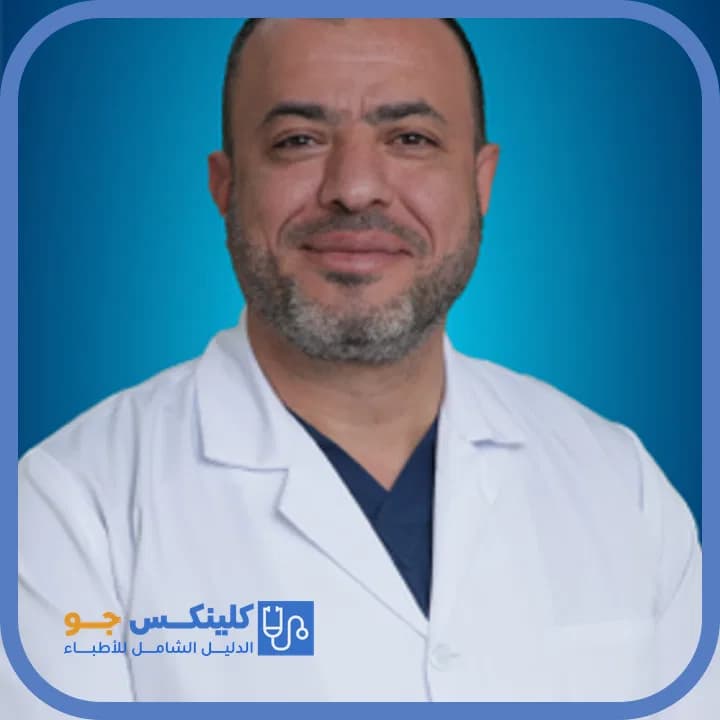
Dr. Ghassan Mohammad Shawabkeh is a cardiology and interventional catheterization consultant whose clinic is in Shmeisani, Amman. He holds the Jordanian Board in Internal Medicine and the Arab and Saudi Boards in Cardiology. His biography says he graduated from Poznan University in Poland in 2001 and holds a European fellowship and a European cardiac and vascular catheterization credential. It also lists training at a Riyadh university medical city and cardiology leadership at Riyadh Care Hospital. His stated focus includes complex coronary interventions, chronic occlusions, calcification, and left-main and branching lesions. Published services include diagnostic catheterization, coronary angioplasty and stenting, radial-access catheterization, echocardiography, stress testing and ambulatory rhythm monitoring. The clinic opens Saturday to Wednesday 11:00–17:00 and Thursday 11:00–15:00. Arab Orient Insurance is listed.
Suits: Shmeisani patients wanting complex coronary assessment alongside full outpatient heart testing
Dr. Yazan Moawia Al Kilani is a cardiologist with a cardiac catheterization sub-specialty, listed in Arjan, Amman. His biography says he sees patients at his private outpatient clinic in Royal Hospital. He holds German specialist certifications (Facharzt) in Internal Medicine (Münster, 2017) and Cardiology (Hannover, 2020), and a Hypertensiology qualification from the German Hypertension Society (2019). He studied medicine at Jordan University of Science and Technology. Published services include diagnostic cardiac catheterization, coronary angioplasty and stenting, post-catheterization and stent follow-up, heart stent consultation and preoperative cardiac risk assessment, plus echo and stress testing. The clinic opens Saturday to Thursday, 10:00–16:00. Arab Orient Insurance is listed.
Suits: Stent consultations and follow-up, especially with high blood pressure
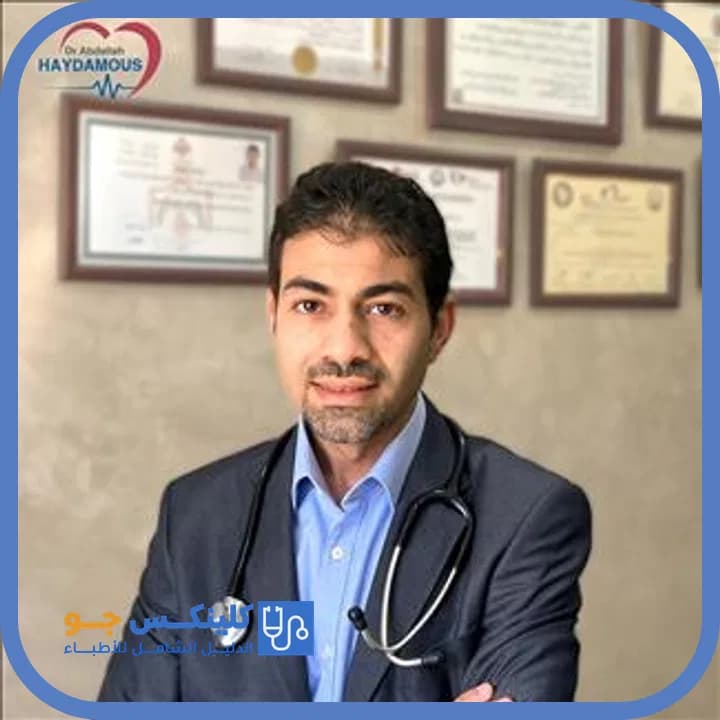
Dr. Abdallah Walid Haydamous is a cardiology and interventional catheterization specialist on Mecca Street, Amman. His biography says he sees patients at ELITE Medical Care in Crimson Plaza. He holds the Arab Board in Cardiology and the Jordanian Board in Internal Medicine, with a medical degree from Al-Baath University in Syria. He trained in internal medicine at the Islamic Hospital and in cardiology at Jordan University Hospital. His biography lists memberships of the American College of Cardiology and the Jordanian cardiac society. Published services include diagnostic catheterization, coronary angioplasty and stenting, and radial (transradial) access catheterization, alongside echo and cardiovascular risk assessment. The clinic opens Saturday to Thursday, 10:00–18:00, the longest listed hours here. Arab Orient Insurance is listed.
Suits: Patients asking about wrist-access catheterization; later afternoon appointments on Mecca Street
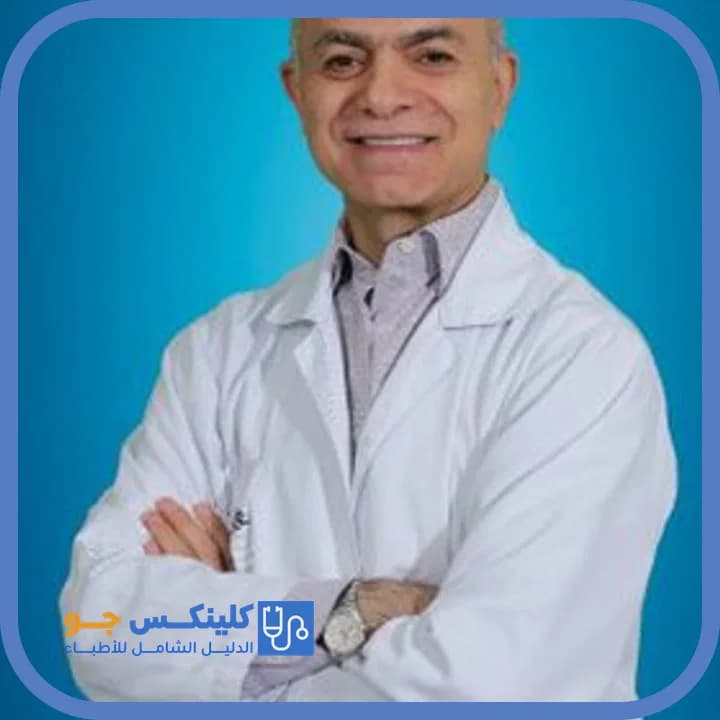
Dr. Munther Awni Al Saafin is a cardiologist with a cardiac catheterization sub-specialty at Jordan Hospital and Medical Centre Outpatient Clinics in Jabal Amman. He studied medicine at Kuban Medical Academy in Russia. He trained in internal medicine at Islamic Hospital and completed a cardiology fellowship at Jordan Hospital. His biography mentions interventional training in several centres. His stated interests include complex coronary intervention, chronic total coronary occlusion, valve disease and vascular conditions. Published services include angioplasty and stent placement, assessment of complex coronary disease, aortic stenosis assessment, TAVR, and carotid artery catheterization. He lists English and Russian. Hours are Saturday to Thursday, 10:00–17:00. Arab Orient Insurance is listed.
Suits: Complex coronary, valve or carotid questions; English or Russian speakers
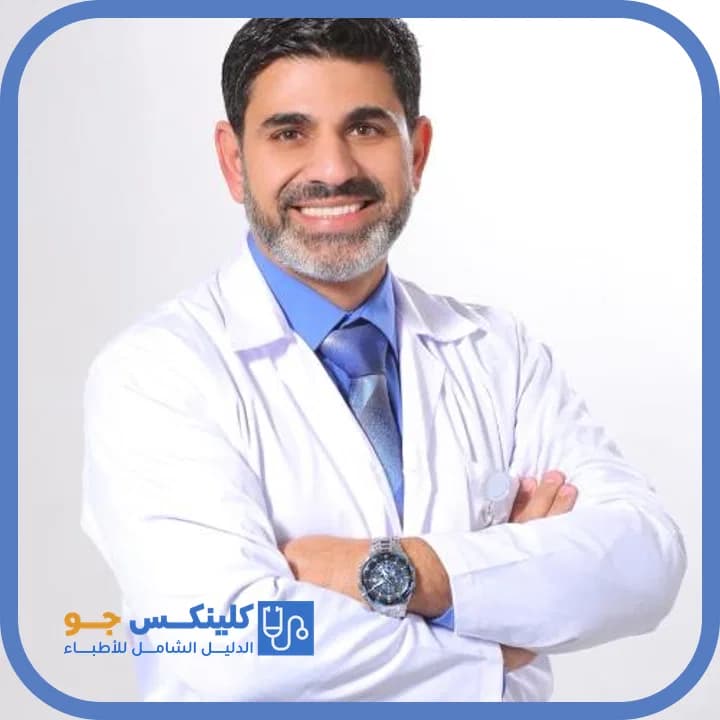
Dr. Imad Al Haddad practises cardiology and interventional cardiovascular medicine at Jordan Hospital and Medical Centre Outpatient Clinics in Jabal Amman. He studied medicine at the University of Jordan (1987). He completed an internal medicine residency (1992) and a cardiology fellowship (1995) at Stony Brook University, then a vascular medicine fellowship at Tufts University (1998). His interventional cardiology fellowship was at Johns Hopkins University (2000). Published services include angioplasty and stent placement, assessment of complex coronary disease, aortic stenosis assessment, TAVR, and carotid and peripheral arterial disease follow-up. His biography says catheter procedures are arranged in hospital facilities when indicated. He lists Arabic and English. Hours are Saturday to Thursday, 10:00–17:00. Arab Orient Insurance is listed.
Suits: Coronary plus leg or neck artery concerns; Arabic or English consultations
Every matching doctor profile in this country was scored out of 100 for how complete and checkable its published information is, and the highest scores appear here in order. Featured placement does not change a profile's score, and the score does not measure treatment quality or outcomes — it tells you how much you can check before you call.
Ties are broken by the number of approved reviews, then published years of experience. Confirm the service, branch, appointment, fees and insurance coverage with the practice before visiting.
Angioplasty, also called percutaneous coronary intervention (PCI), widens a narrowed or blocked heart artery. A thin tube (catheter) is passed through an artery in the wrist or groin. A small balloon opens the narrowing, and a mesh tube called a stent is usually left in place to keep the artery open. It is done in a hospital catheterization lab, normally under local anaesthetic.
It is used in two broad situations:
A stent is not right for every narrowing. Some people do well on medicines alone, and others with widespread disease may be offered bypass surgery instead. The decision comes after tests and a discussion with a cardiologist.
Call 911 without waiting for an appointment if you have:
Do not drive yourself to hospital. After a recent stent, also seek urgent help for bleeding or growing swelling at the catheter site, or a hand or leg that turns cold, pale or numb.
There is no single answer to who the best angioplasty and stent placement doctors in Jordan are. This list is ordered by profile completeness, not outcomes. Use practical criteria instead:
The first appointment is usually a consultation, not the procedure. The cardiologist reviews your symptoms, history and medicines and examines you. An ECG is often done, and echocardiography or stress testing may follow. Catheterization is arranged later if it is needed.
Never stop blood thinners prescribed after a stent without speaking to your cardiologist first. Stopping early can be dangerous.
All five profiles list Arab Orient Insurance. Even so, confirm the details directly, as coverage depends on your specific policy.
Book through the profile on this page, and ask for a written summary of any treatment plan.
This is a Kingdom-wide list for Jordan. Each profile shows its own city, district and clinic name, and the map location on the profile page helps you plan the trip. Before you go, ask the clinic about parking, the building entrance and which floor to go to. Clinics inside hospital buildings can be hard to find. Allow extra time for traffic and registration.
If you are booked for a catheterization, arrange for someone to drive you home afterwards. You should not drive straight after the procedure. If you are visiting Jordan, plan follow-up appointments before you travel back.
No clinic on ClinicsJo has published a price for Angioplasty and stent placement yet, so we do not quote an estimated figure. What is published is the consultation fee: 20–25 JOD (profiles: 4). The doctor sets the treatment price after assessing your case.
Before booking, ask the clinic for the all-inclusive price and what it covers, any extra tests or scans, how many follow-up visits are included, the payment options, and whether your insurance is accepted. You can reach them through the contact details on the doctor and clinic profiles on this page.
The figures above were published by the clinics and doctors themselves on ClinicsJo and may change. We do not estimate prices. Confirm the all-inclusive price with the clinic before booking. Offers on ClinicsJo
Prepared by: the ClinicsJo editorial team. Last updated 18 October 2026.
List data: the doctor and clinic profiles published on ClinicsJo — services, doctors, hours, insurers and addresses entered by the providers or compiled by our team from public sources. Reviews appear only after moderation, the verified badge only on profiles the platform administration verified, and no price appears unless the profile itself publishes it. Where the data comes from and how lists are ordered · Medical content policy
Health references: the health information in the guide is general and written to agree with the guidance of major health bodies. To read further or check it:
The full directory behind this list, and our other shortlists for the same topic and place.
This page helps you compare published profiles; it is not medical advice and does not rank clinical skill. In an emergency call 911 or go to the nearest emergency department.